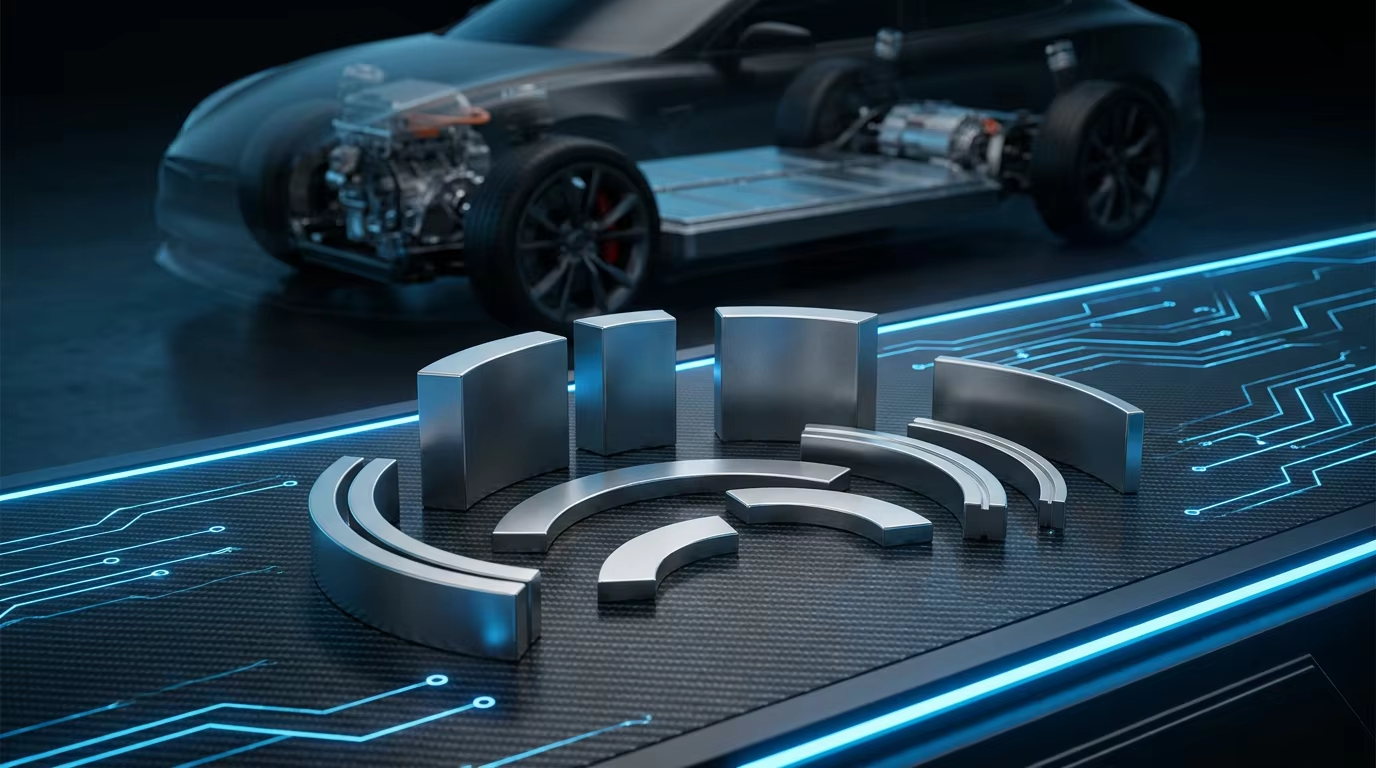
High performance magnets for electric vehicle motors are essential components that enable modern electric vehicles (EVs) to achieve high efficiency, powerful acceleration, compact designs, and extended driving range. As the global automotive industry shifts toward electrification, the demand for advanced magnetic materials continues to rise. Permanent magnets, especially NdFeB (Neodymium Iron Boron) and SmCo (Samarium Cobalt) magnets, play a critical role in improving motor performance and supporting the development of next-generation electric mobility solutions.
Electric vehicle manufacturers rely on high-performance magnetic materials to increase motor efficiency, reduce energy consumption, and enhance overall vehicle performance. From passenger EVs to commercial electric transportation, advanced permanent magnets have become a cornerstone of modern motor technology.
Why Electric Vehicles Depend on Advanced Magnet Technology?
The rapid growth of electric vehicles is driven by increasing environmental awareness, government incentives, and advancements in battery and motor technologies. Unlike traditional internal combustion engine (ICE) vehicles, EVs use electric motors to convert electrical energy into mechanical motion.
The efficiency and performance of these motors largely depend on the quality of the magnets used inside them. Stronger magnets generate more powerful magnetic fields, allowing motors to produce higher torque and power while maintaining compact dimensions and lower weight.
Leading automotive manufacturers such as Tesla, BYD, Nissan, BMW, and Volkswagen continue investing in advanced motor technologies to improve vehicle efficiency and driving experience. As EV adoption accelerates worldwide, the demand for high-performance motor magnets continues to expand.
What Are High-Performance Magnets?
High-performance magnets are magnetic materials that offer exceptional magnetic strength, excellent demagnetization resistance, and stable performance under demanding operating conditions.
For electric vehicle motors, the most commonly used high-performance magnets include:
- NdFeB (Neodymium Iron Boron) Magnets
- SmCo (Samarium Cobalt) Magnets
These rare earth magnets offer significantly higher magnetic energy density than conventional ferrite or AlNiCo magnets, making them ideal for high-efficiency electric motors.
Key advantages include:
- Strong magnetic field generation
- High power density
- Compact motor designs
- Improved energy efficiency
- Excellent torque output
- Long service life
NdFeB Magnets for Electric Vehicle Motors
NdFeB magnets are currently the most widely used permanent magnets in electric vehicle motors. Composed primarily of neodymium, iron, and boron, they provide the highest magnetic energy product among commercially available magnets.

Exceptional Magnetic Strength
NdFeB magnets generate extremely strong magnetic fields, enabling electric motors to achieve higher efficiency and superior power output.
Compared with ferrite magnets and AlNiCo magnets, NdFeB magnets offer:
- Higher magnetic flux density
- Greater energy density
- Improved motor responsiveness
- Increased power output
These characteristics allow electric vehicle motors to deliver excellent performance while maintaining compact dimensions.
High Torque and Power Density
Electric vehicles require instant torque for rapid acceleration and responsive driving performance.
NdFeB magnets help motors:
- Generate high torque at low speeds
- Maintain efficiency at high speeds
- Improve acceleration performance
- Enhance vehicle driving dynamics
The superior magnetic properties of NdFeB magnets allow engineers to design smaller motors without sacrificing performance.
Compact and Lightweight Design
Reducing vehicle weight is a major goal in EV engineering.
By utilizing powerful NdFeB magnets, manufacturers can:
- Reduce motor size
- Lower overall vehicle weight
- Improve battery efficiency
- Increase driving range
Compact motor designs also provide greater flexibility for vehicle architecture and drivetrain integration.
Temperature Performance
Modern EV motors operate under demanding thermal conditions.
Special high-temperature NdFeB grades can maintain stable magnetic performance under elevated operating temperatures, ensuring reliable motor operation during continuous use.
Corrosion Protection
Standard NdFeB magnets are susceptible to corrosion if left unprotected.
To improve durability, manufacturers commonly apply coatings such as:
- Nickel (Ni-Cu-Ni)
- Epoxy
- Zinc
- Phosphate coatings
These protective layers help extend service life in challenging automotive environments.
SmCo Magnets for High Temperature EV Applications
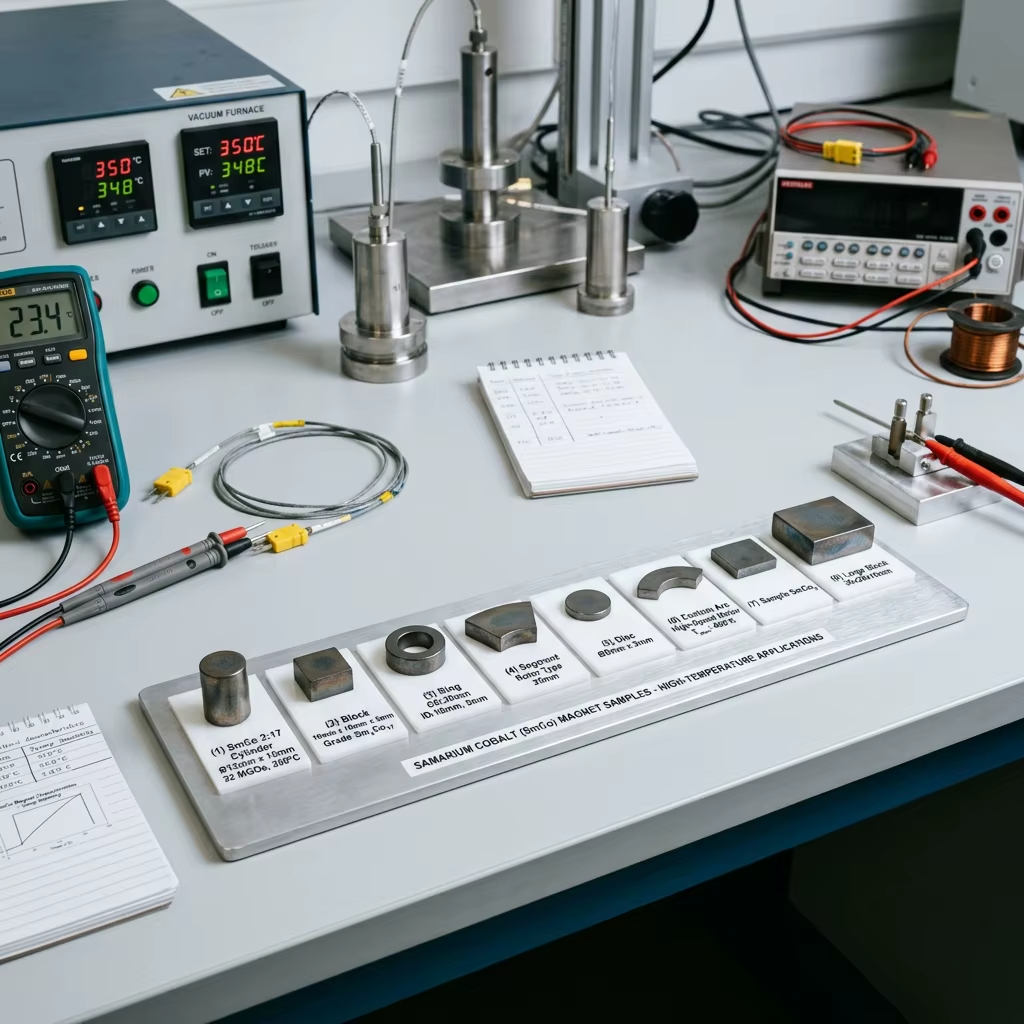
Samarium Cobalt (SmCo) magnets are another category of rare-earth magnets used in electric-vehicle motors and other demanding applications.
Although SmCo magnets typically have lower magnetic strength than NdFeB magnets, they offer exceptional thermal stability and corrosion resistance.
Key Benefits of SmCo Magnets
Superior Temperature Resistance
SmCo magnets maintain stable magnetic properties at temperatures exceeding 300°C, making them suitable for extreme operating conditions.
Excellent Corrosion Resistance
Unlike NdFeB magnets, SmCo magnets naturally resist oxidation and corrosion without requiring additional protective coatings.
Long-Term Reliability
SmCo magnets demonstrate outstanding resistance to demagnetization, ensuring consistent performance over long operating periods.
NdFeB vs SmCo Magnets
| Property | NdFeB Magnets | SmCo Magnets |
| Magnetic Strength | Higher | Moderate |
| Temperature Resistance | Good | Excellent |
| Corrosion Resistance | Requires Coating | Naturally Resistant |
| Cost | Lower | Higher |
| Power Density | Excellent | Very Good |
For most electric vehicle applications, NdFeB magnets remain the preferred choice due to their superior magnetic performance and cost effectiveness.
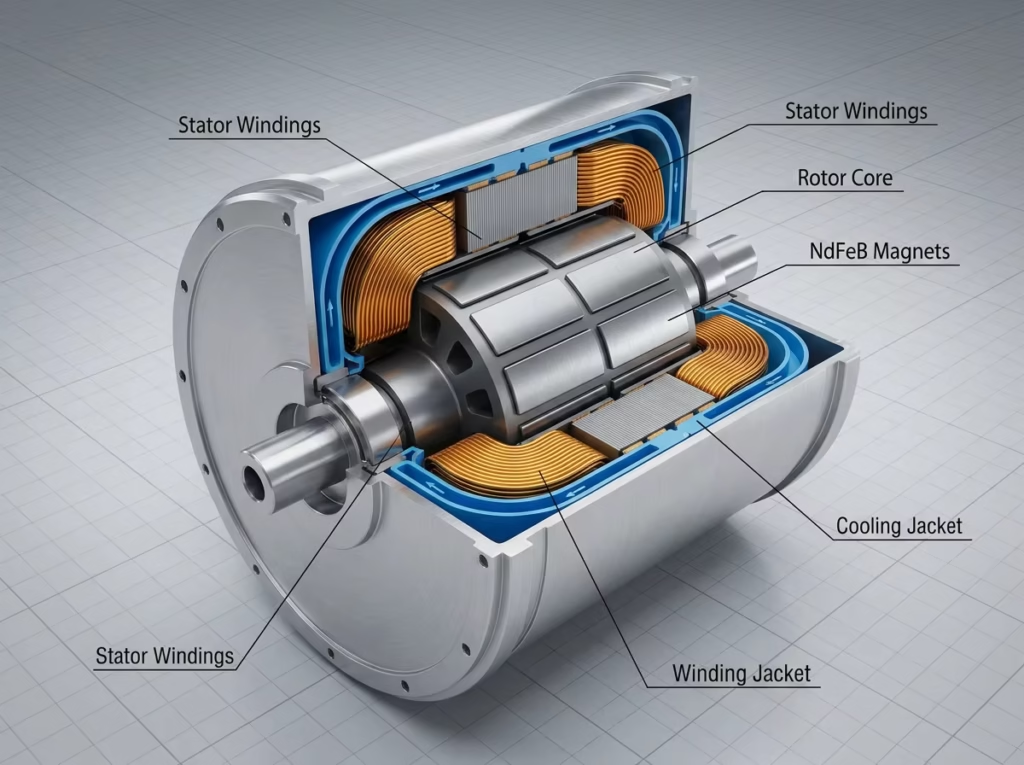
Permanent Magnet Synchronous Motors (PMSM)
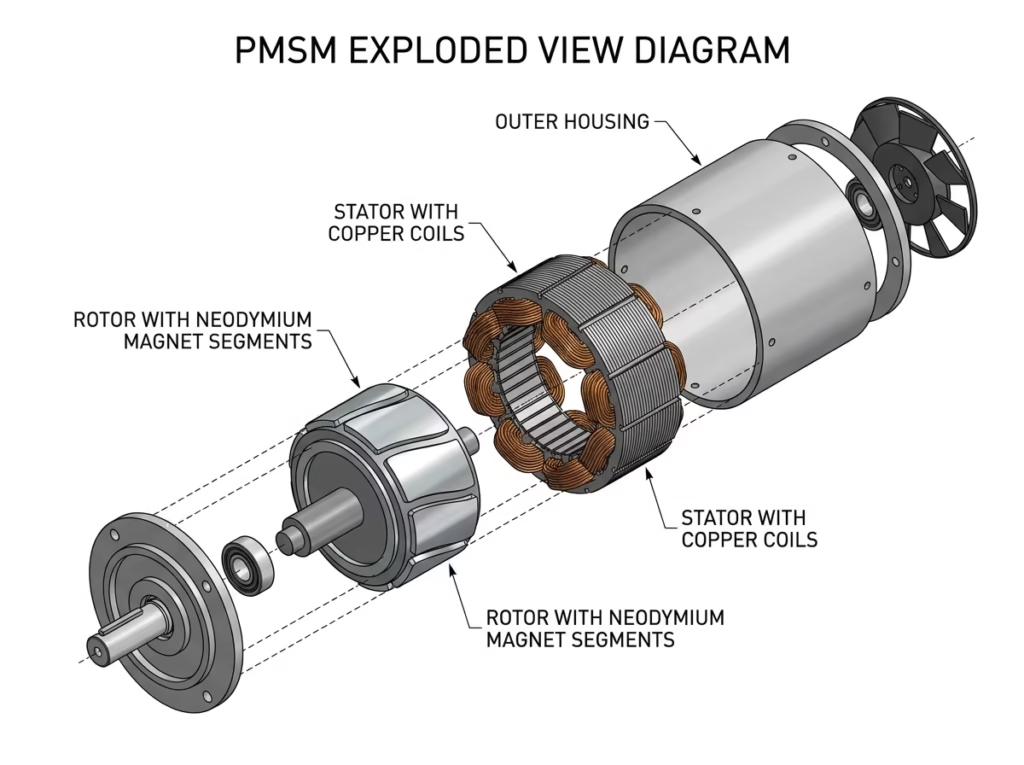
Permanent Magnet Synchronous Motors (PMSMs) are among the most common motor types used in modern electric vehicles.
How PMSM Motors Work
A PMSM consists of:
- Stator
- Rotor
- Electronic Control System
The stator generates a rotating magnetic field through three-phase AC current.
Permanent magnets embedded in the rotor generate a constant magnetic field.
The interaction between these magnetic fields causes the rotor to rotate synchronously with the stator field.
Why PMSM Motors Use NdFeB Magnets
NdFeB magnets enable PMSM motors to achieve:
- High efficiency
- High torque density
- Smooth operation
- Reduced energy consumption
- Compact motor construction
These advantages make PMSM motors the preferred choice for many passenger electric vehicles.
BLDC Motors and Rare Earth Magnets
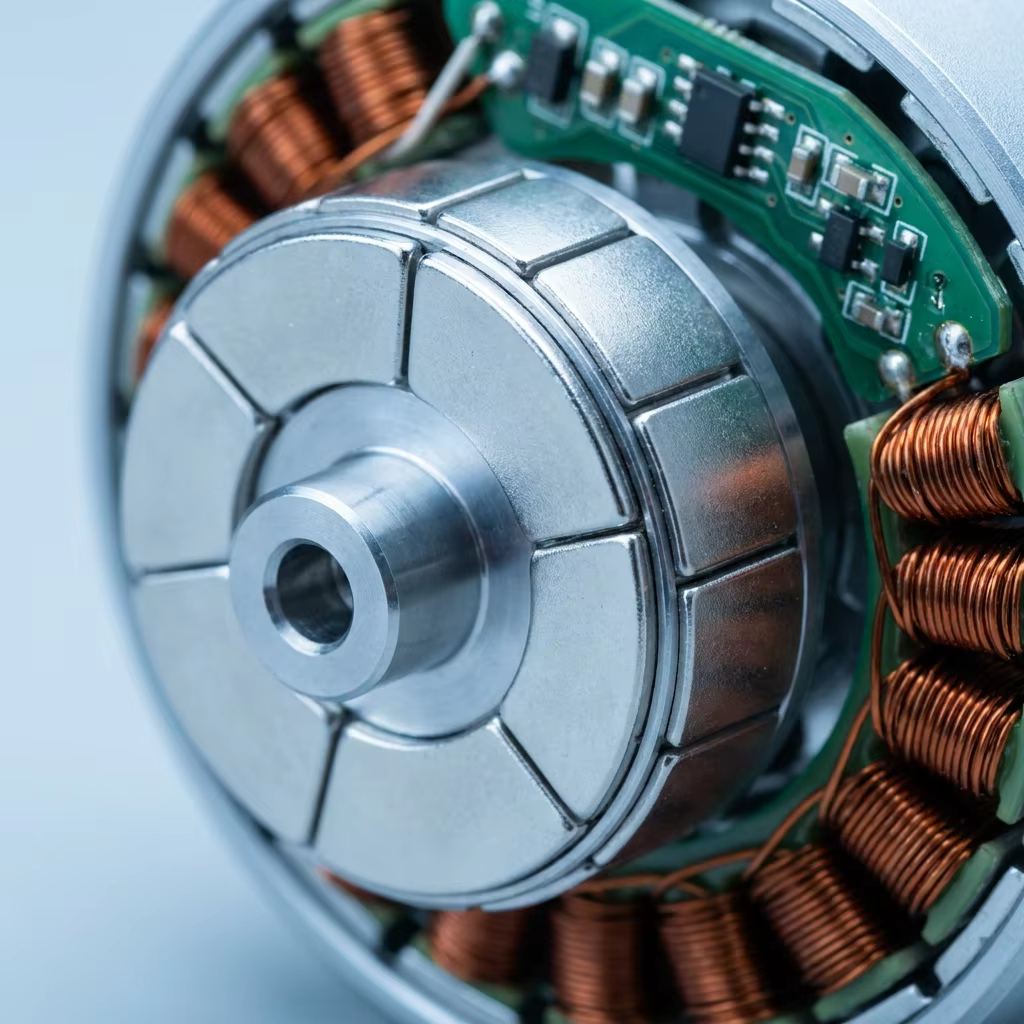
Brushless DC Motors (BLDC) are another important category of permanent magnet motors.
Unlike traditional brushed motors, BLDC motors eliminate mechanical brushes and rely on electronic commutation.
Main Components
A BLDC motor consists of:
- Permanent magnet rotor
- Stator windings
- Electronic controller
Advantages of Rare Earth Magnets in BLDC Motors
High-performance magnets contribute to:
Increased Power Density
Rare earth magnets allow BLDC motors to deliver high power output in compact packages.
Improved Efficiency
Permanent magnetic fields reduce electrical losses and improve overall energy conversion efficiency.
Reduced Maintenance
The absence of brushes minimizes wear and maintenance requirements.
Quiet Operation
BLDC motors operate with lower noise and vibration levels, enhancing driving comfort.
Benefits of High Performance Magnets in EV Motors
Higher Efficiency
Strong magnetic fields improve energy conversion efficiency, reducing electricity consumption and extending battery life.
Longer Driving Range
Efficient motors consume less energy, allowing vehicles to travel greater distances on a single charge.
Improved Torque Density
High-performance magnets enable motors to generate greater torque within smaller dimensions.
Reduced Vehicle Weight
Compact motor designs help reduce overall vehicle mass, contributing to better efficiency and performance.
Enhanced Reliability
Advanced magnetic materials maintain stable performance over long operating periods and under demanding conditions.
Future Trends in EV Magnet Technology
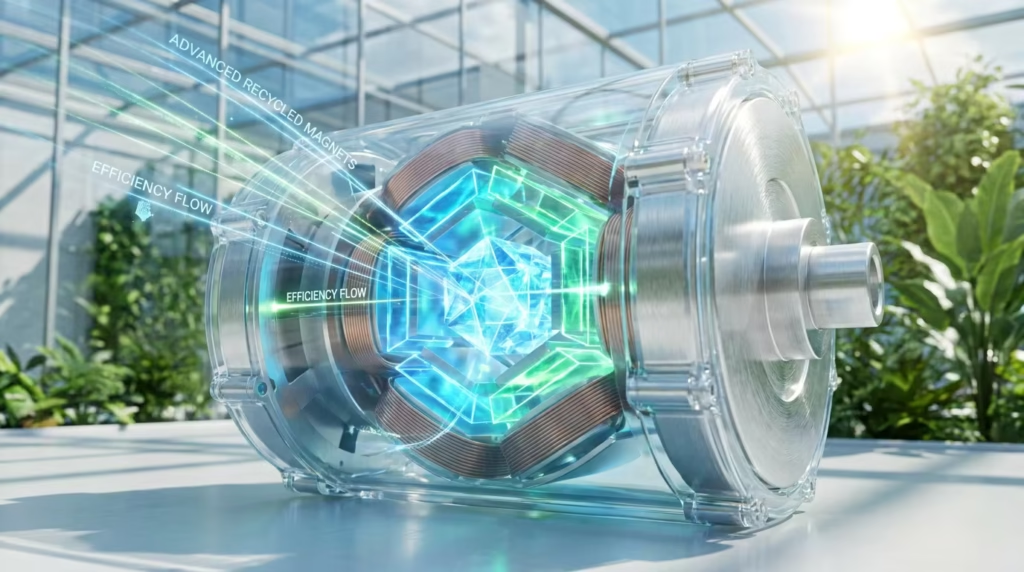
As electric vehicle adoption continues to accelerate, researchers are developing next-generation magnetic materials that offer improved sustainability and reduced reliance on rare earth elements.
Emerging technologies include:
Advanced Magnetic Materials
- Nanostructured magnetic materials
- High-temperature magnetic compounds
- Soft magnetic composites
- Multifunctional magnetic materials
Rare Earth Alternatives
Researchers are exploring alternative materials such as:
- Iron Nitride (Fe-N)
- Manganese-Bismuth (MnBi)
- Manganese-Aluminum (MnAl)
These materials may eventually provide viable alternatives to traditional rare earth magnets while improving supply chain sustainability.
Improved Manufacturing Technologies
Future innovations are expected to focus on:
- Enhanced magnetic performance
- Reduced material consumption
- Better thermal stability
- Environmentally responsible production methods
Why Choose HUAJIN Magnets for EV Motor Magnets
HUAJIN Magnets specializes in supplying high-performance permanent magnets for electric vehicle motor manufacturers worldwide.
Our capabilities include:
- NdFeB magnets from N35 to N55 grades
- High-temperature magnet grades up to 220°C
- Custom magnet shapes and dimensions
- Nickel, epoxy, zinc, and specialized coatings
- Tight-tolerance machining
- Rotor magnet assemblies
- Prototype development support
- Mass production capabilities
- Global export services
Whether you are developing PMSM motors, BLDC motors, traction motors, or advanced electric drive systems, HUAJIN Magnets can provide customized magnetic solutions tailored to your project requirements.
Frequently Asked Questions
What magnets are used in electric vehicle motors?
Most electric vehicle motors use NdFeB (Neodymium Iron Boron) magnets because they provide exceptional magnetic strength, high efficiency, and excellent power density.
Why are NdFeB magnets preferred for EV motors?
NdFeB magnets offer stronger magnetic fields, higher torque density, compact motor designs, and improved energy efficiency compared to conventional magnetic materials.
What is the difference between NdFeB and SmCo magnets?
NdFeB magnets provide higher magnetic strength and better cost performance, while SmCo magnets offer superior temperature resistance and corrosion resistance.
Can magnets improve EV driving range?
Yes. High-performance magnets increase motor efficiency, reducing energy consumption and helping extend vehicle driving range.
Can HUAJIN Magnets provide custom EV motor magnets?
Yes. HJ Magnets offers customized magnet grades, shapes, coatings, tolerances, and magnetic assemblies for electric vehicle motor applications.
Conclusion
High-performance magnets for electric vehicle motors are fundamental to the success of modern electric mobility. NdFeB and SmCo magnets enable higher efficiency, greater torque density, compact motor designs, and longer driving ranges. As the global automotive industry continues its transition toward electrification, advanced magnetic materials will remain a key driver of innovation.
With ongoing research into next-generation magnetic technologies and sustainable alternatives, the future of EV motor magnets promises even greater performance, efficiency, and reliability. Choosing the right magnetic solution today helps manufacturers build more powerful, efficient, and competitive electric vehicles for tomorrow.