Magnetic buttons are becoming a popular closure choice in modern clothing. They help users open and close garments faster. They also create a clean and simple look.
Many clothing brands now use magnetic buttons in outdoor jackets, sportswear, functional coats, children’s clothing, and lightweight garments. These buttons do more than replace traditional buttons or snaps. They improve comfort, speed, and product design.
The magnet inside the button matters. But the outer covering material also plays an important role. It affects flexibility, touch, wear resistance, appearance, and long-term use.
PVC and TPU are two common covering materials for magnetic buttons. Both can protect the magnet and improve the user experience. But they perform differently in real clothing applications.
This guide compares PVC vs TPU magnetic buttons and helps you choose the right material for your product.
What Are PVC and TPU Magnetic Buttons?
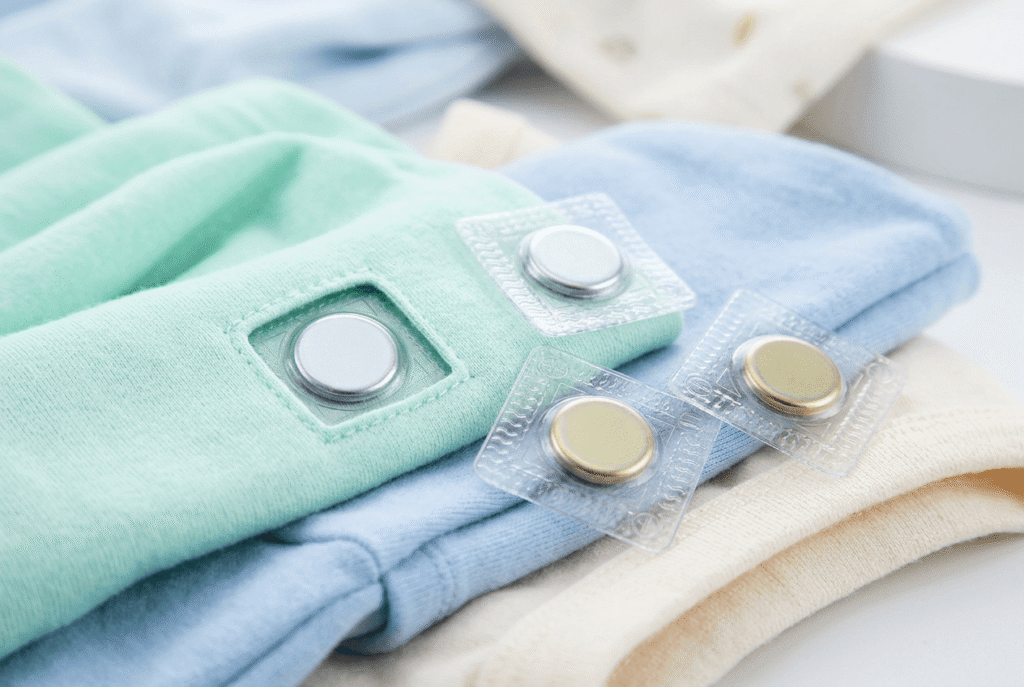
PVC and TPU magnetic buttons use an internal magnet to create a fast and easy closure. The outer layer wraps the magnet and protects it from fabric friction, moisture, and daily wear.
This outer layer also makes the button easier to sew, heat seal, or integrate into garments and bags.
PVC magnetic buttons use a PVC covering. PVC offers good molding performance, stable shape, and strong cost control. It works well for standard clothing and large-volume production.
TPU magnetic buttons use a TPU covering. TPU feels softer and more elastic. It bends more easily and adapts better to body movement, fabric stretching, and frequent use.
Both materials can support invisible magnetic closures. The best choice depends on the garment structure, fabric type, use scenario, and target price.
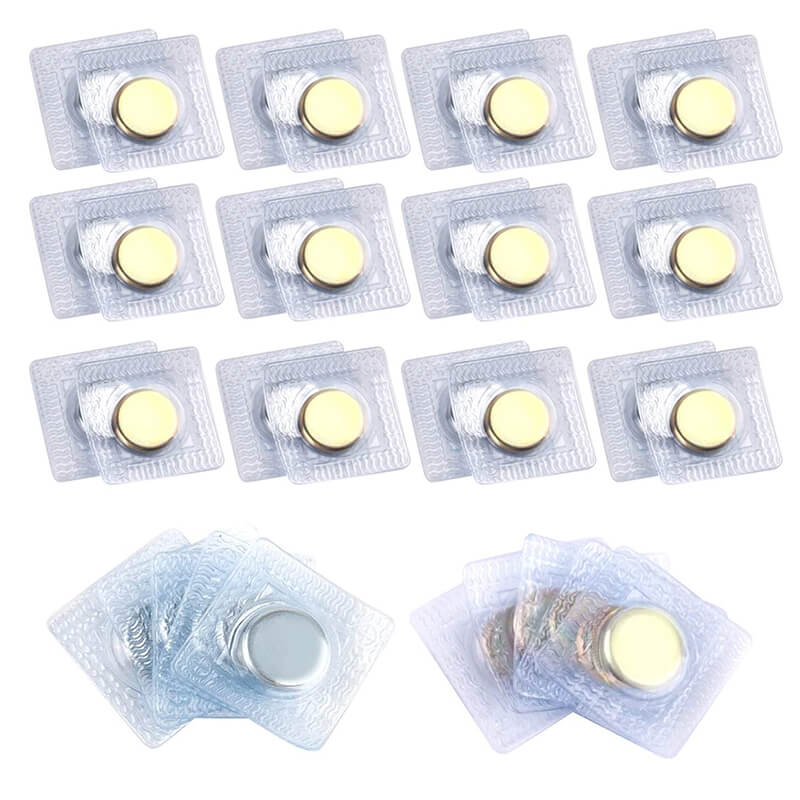
PVC vs TPU Magnetic Buttons: Quick Comparison
| Comparison Item | PVC Magnetic Button | TPU Magnetic Button |
|---|---|---|
| Flexibility | Good | Excellent |
| Elasticity | Average | Excellent |
| Flexural Resistance | Good | Excellent |
| Abrasion Resistance | Excellent | Excellent |
| Touch and Feel | Relatively rigid | Soft and elastic |
| Appearance Options | Wide color range | Simple and modern look |
| Cost Control | More cost-effective | Higher material cost |
| Regular Clothing | Highly suitable | Suitable |
| Sportswear | Suitable | More suitable |
| Outdoor Functional Wear | Suitable | More suitable |
| Lightweight Products | Suitable | More suitable |
Key Differences Between PVC and TPU Magnetic Buttons
1. Flexibility
TPU offers better flexibility than PVC. It can bend with the fabric and return to shape more easily.
This matters for garments that move with the body. Sportswear, outdoor jackets, soft-shell coats, and lightweight functional clothing often bend at the sleeves, chest, pockets, and front placket. TPU magnetic buttons handle these movements better.
PVC also has good flexibility, but it feels more rigid. It works well when the garment structure does not bend frequently.
2. Touch and Wearing Comfort
TPU feels softer and more elastic. It can create a smoother wearing experience, especially when the button sits close to the body.
PVC feels firmer. This is not a problem for many garments. Workwear, uniforms, casual jackets, and bags often need stable shape and consistent appearance more than soft touch.
If comfort and movement matter most, choose TPU. If structure and cost matter more, PVC can be a better option.
3. Cost Control
PVC usually offers better cost control. It is a strong choice for bulk orders, standard garments, uniforms, promotional bags, and products with strict price targets.
TPU usually costs more. But the higher cost can make sense when the product needs better flexibility, a softer feel, or stronger dynamic performance.
Do not choose by material price alone. Choose by total product value. A higher-cost TPU button may improve the final garment experience. A lower-cost PVC button may deliver better value for high-volume standard products.
4. Appearance and Design
PVC supports a wide range of colors and stable molding results. It helps brands keep a consistent appearance across large production runs.
TPU often gives a clean, modern, and softer look. It suits premium functional clothing, sportswear, outdoor apparel, and minimal design styles.
For fashion products, color matching may make PVC attractive. For technical apparel, flexibility and touch may make TPU more suitable.
5. Durability in Real Use
Both PVC and TPU magnetic buttons can offer good abrasion resistance. Both materials help protect the internal magnet from daily friction.
The difference becomes apparent when the garment bends frequently. TPU usually performs better under repeated bending, stretching, and movement. PVC works well when the garment needs stable shape and does not face heavy flexing.
When Should You Choose PVC Magnetic Buttons?
Choose PVC magnetic buttons when your product needs cost control, stable shape, and large-scale production.
PVC works well for:
- Regular casual wear
- Uniforms
- Workwear
- Standard jackets
- Fashion coats
- Stiffer bags
- Promotional textile products
- Products with strict target pricing
PVC magnetic buttons can balance cost, appearance, and performance. They also support consistent production, which helps buyers manage batch orders.
For standard clothing, PVC often provides enough flexibility and wear resistance. In this case, you do not need to increase material cost just to pursue maximum softness.
For product options, see the PVC magnetic snap button for garment closure.
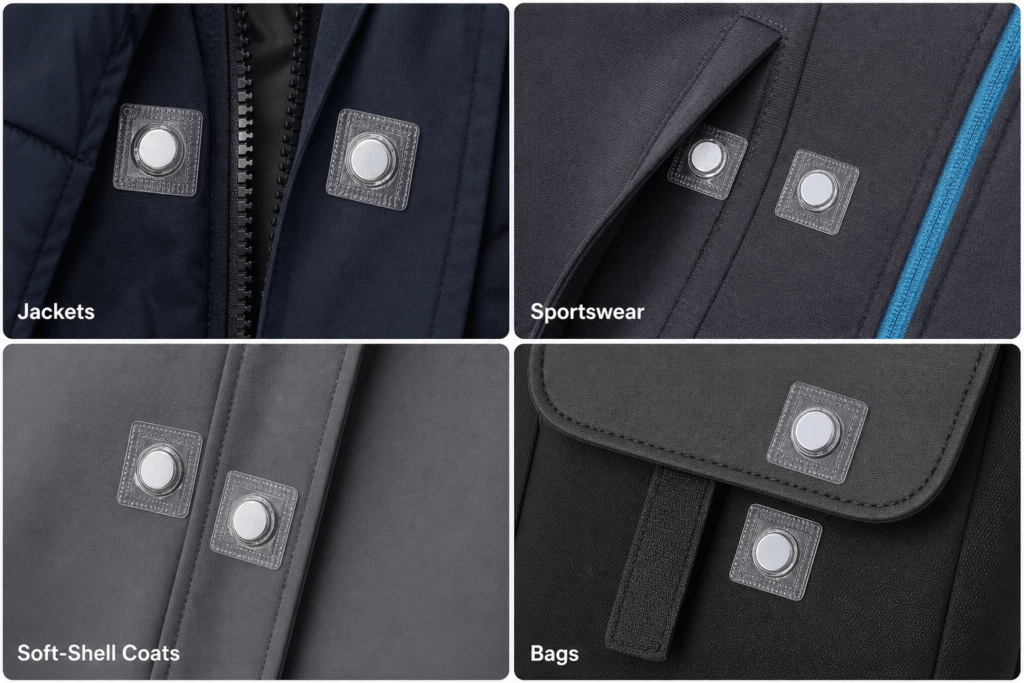
When Should You Choose TPU Magnetic Buttons?
Choose TPU magnetic buttons when your product needs softness, elasticity, and better movement performance.
TPU works well for:
- Outdoor jackets
- Sportswear
- Soft-shell jackets
- Lightweight functional coats
- Children’s clothing
- Adaptive clothing
- Soft bags
- Sports bags
- Garments that bend often during wear
TPU can adapt better to the movement of the fabric. It helps the magnetic button feel more natural during daily use.
This is why TPU magnetic buttons get more attention in outdoor clothing, sportswear, and functional apparel.
For product options, see the TPU magnetic button waterproof magnetic snap.
Why Does the Covering Material Affect Clothing Performance?
A magnetic button looks like a small accessory. But in functional clothing, it can affect the full wearing experience.
For example, an outdoor jacket bends at many points. The sleeve, chest, lapel, and pocket areas move when the wearer walks, climbs, runs, or reaches forward.
If the outer layer of the magnetic button feels too hard, it may reduce comfort. It may also create a stiff feeling around the closure area.
TPU helps solve this problem. Its soft and elastic structure can follow fabric movement more naturally.
PVC can still perform well in many garments. If the garment structure stays stable and does not bend heavily, PVC can meet most needs. It also helps control cost.
The same logic applies to bags. A stiffer bag can use PVC magnetic buttons for shape support and appearance control. A soft bag or sports bag may benefit from TPU because it bends more often.
Magnetic Buttons vs Traditional Snaps
Traditional snaps often need accurate alignment and pressure. The user must place both sides together and press them into position.
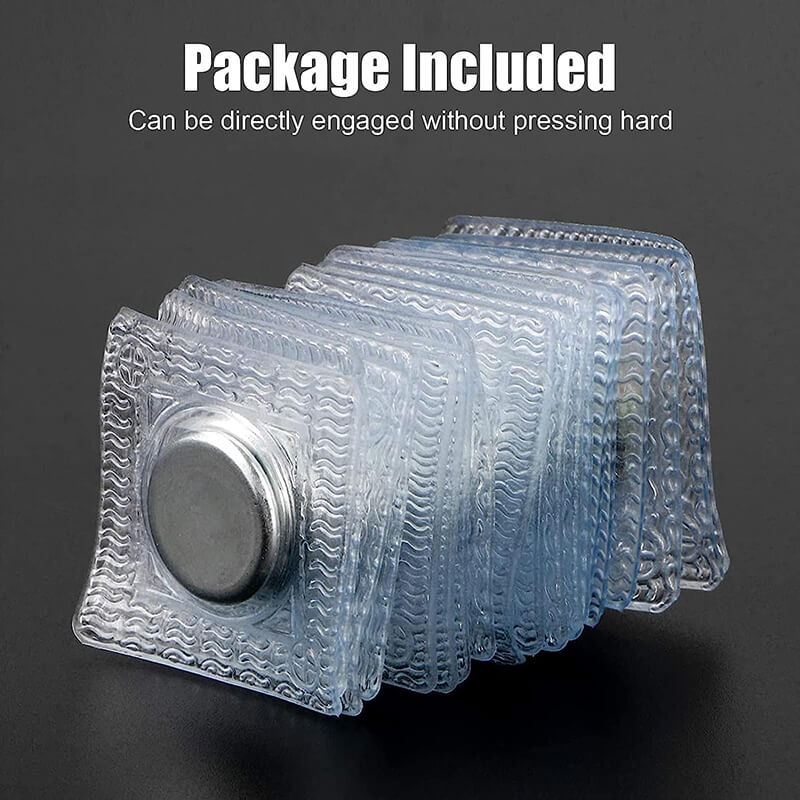
Magnetic buttons make this process easier. When the two sides get close, the magnets attract each other and help guide the closure.
This creates several benefits:
- Faster opening and closing
- Easier use for children and elderly users
- Cleaner garment appearance
- Less visible hardware
- Better user experience in functional clothing
These benefits make magnetic buttons useful for clothing brands that want both function and design.
How to Choose the Right Magnetic Button Material
Do not choose PVC or TPU by material name alone. The final performance depends on the full product design.
Use the following checklist before placing a bulk order.
1. Check the Required Magnetic Force
The magnetic force must match the fabric thickness and use case.
If the magnetic force is too weak, the button may open by accident. If the magnetic force is too strong, the user may find it hard to open.
Thicker coats may need stronger attraction. Lightweight garments usually need smaller and lighter magnetic buttons.
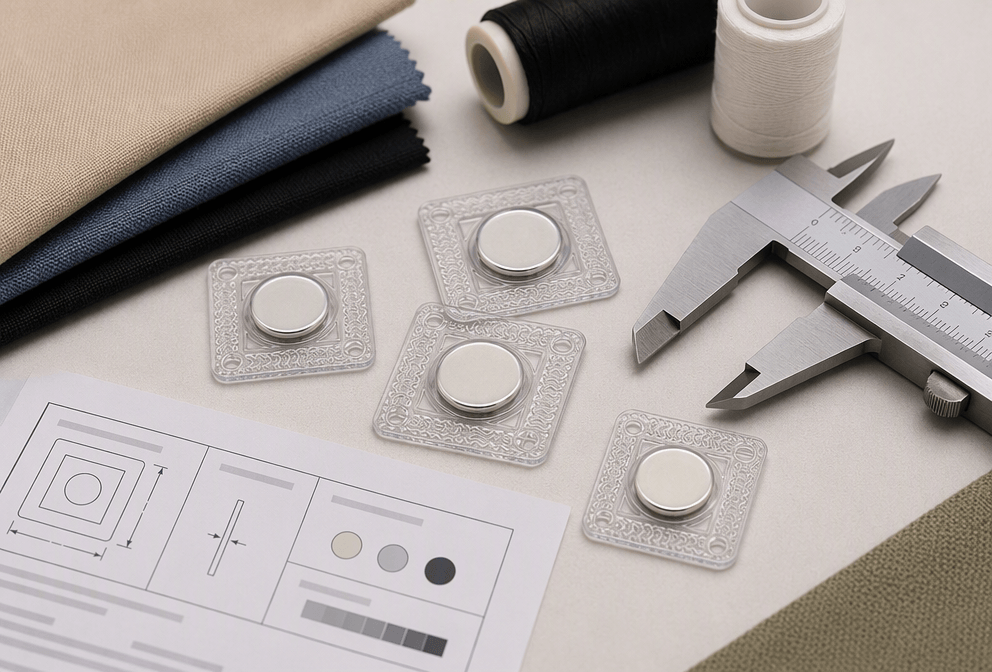
2. Match the Button Size to the Garment
Size affects comfort, closure strength, and appearance.
Small magnetic buttons suit lightweight clothing and hidden closures. Larger or stronger structures may suit thick coats, bags, and outdoor garments.
3. Match the Material to the Fabric
Soft, elastic, or frequently bending fabrics usually work better with TPU.
Stable fabrics, structured garments, and cost-sensitive products often work well with PVC.
Always test the button with the actual fabric. A button that works well on one garment may not work the same way on another garment.
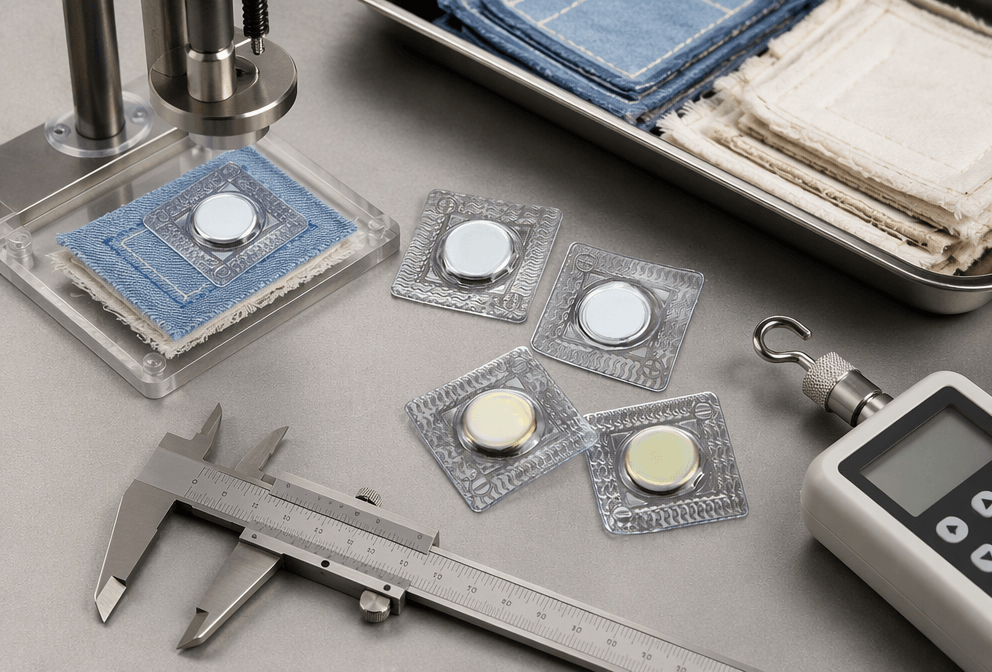
4. Test Before Bulk Production
Sample testing helps reduce risk. Before large-scale procurement, test the magnetic button in real garment conditions.
Recommended tests include:
- Magnetic force test
- Repeated opening and closing test
- Bending test
- Washing or moisture exposure test
- Garment wearing test
- Sewing or installation test
These tests help confirm whether the button matches the final product design.
PVC or TPU: Which One Is Better?
There is no single best material for every application.
Choose PVC magnetic buttons if your product focuses on:
- Cost control
- Stable shape
- Standard clothing use
- Large-volume production
- Wide color options
- Consistent batch supply
Choose TPU magnetic buttons if your product focuses on:
- Flexibility
- Soft touch
- Elasticity
- Repeated bending
- Outdoor use
- Sportswear and functional clothing
- Premium wearing experience
PVC is not only for low-cost products. TPU is not always necessary. The right choice depends on the garment, fabric, structure, and brand positioning.
If you are not sure which material to choose, test both PVC and TPU samples on the final fabric.
FAQ
Are PVC magnetic buttons suitable for clothing?
Yes. PVC magnetic buttons suit regular clothing, uniforms, workwear, fashion jackets, and other standard garments. They offer good cost control, stable appearance, and reliable daily performance.
Are TPU magnetic buttons better than PVC magnetic buttons?
TPU is better for flexibility, elasticity, and soft touch. PVC is better for cost control and stable large-volume production. The better choice depends on the application.
Which magnetic button is better for outdoor jackets?
TPU magnetic buttons are usually better suited to outdoor jackets because they handle bending and movement better. PVC can also work for outdoor garments if the structure is more stable and the cost target is tighter.
Which material is better for sportswear?
TPU is usually the better option for sportswear. It feels softer and adapts better to body movement.
Can PVC and TPU magnetic buttons be customized?
Yes. Magnetic buttons can be customized by size, shape, magnetic strength, thickness, color, and covering material. You can view more options in the magnetic button category.
Conclusion
PVC and TPU magnetic buttons both protect the internal magnet and improve the appearance of garment closures. They also make clothing easier to open and close.
PVC gives better cost control, stable shape, and flexible color options. It suits regular clothing, uniforms, workwear, standard jackets, and large-volume orders.
TPU gives better flexibility, elasticity, and soft touch. It suits sportswear, outdoor jackets, soft-shell coats, lightweight garments, and soft bags.
Before choosing a material, review the garment structure, fabric type, target cost, magnetic force, and real use conditions. Then test samples on the final product.
Looking for customized PVC or TPU magnetic buttons? Explore HJ Magnets’ magnetic button solutions or contact HJ Magnets to request samples and technical support.