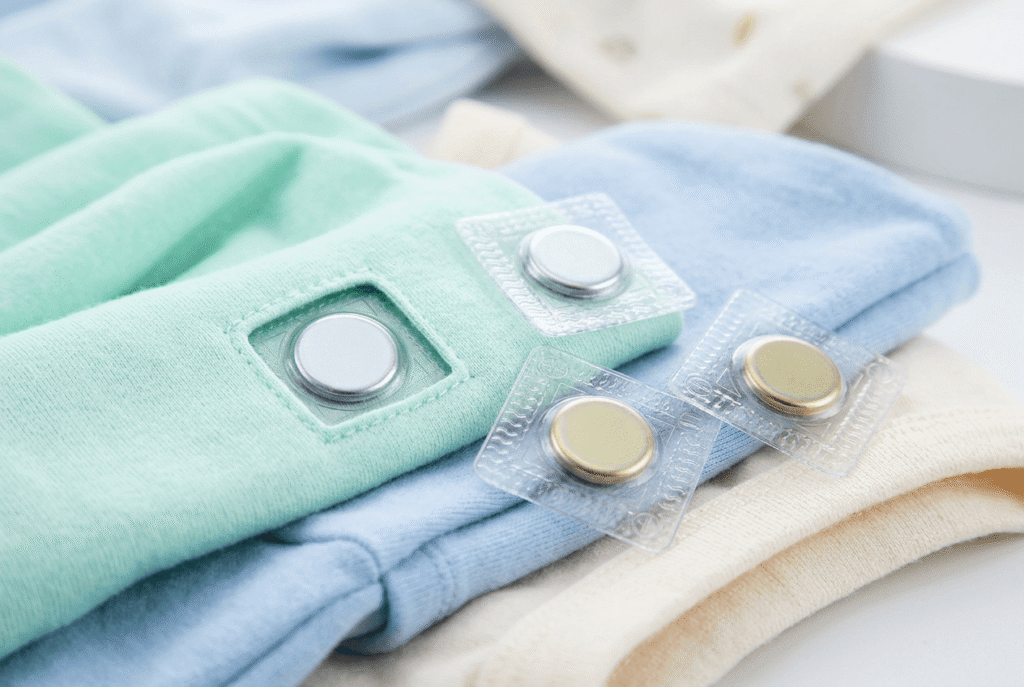
Custom magnetic buttons for clothes are becoming a practical fastening solution for apparel brands, garment manufacturers, and accessory buyers. Compared with traditional snap buttons, rivets, and hook-and-loop fasteners, magnetic button fasteners offer easier one-handed closing, silent fastening, stable magnetism, and flexible customization for different garment styles.
They are widely used in casual wear, coats, outdoor apparel, bags, adaptive clothing, and high-end customized garments. However, many first-time buyers face the same sourcing questions: How should the specifications be defined? How long does sampling take? What MOQ applies to different designs? What affects bulk pricing? And how should quality be inspected before shipment?
This guide explains how to specify, sample, price, inspect, and bulk order custom magnetic buttons for clothes so buyers can reduce development risk and move from concept to mass production more efficiently.
1. How to define specifications for custom magnetic buttons for clothes
Accurate specification confirmation is the first step in any custom magnetic button project. Before sampling or mass production, buyers should define the key parameters clearly to avoid size mismatch, weak fastening, style deviation, or installation problems during garment production.
1.1 Size and shape
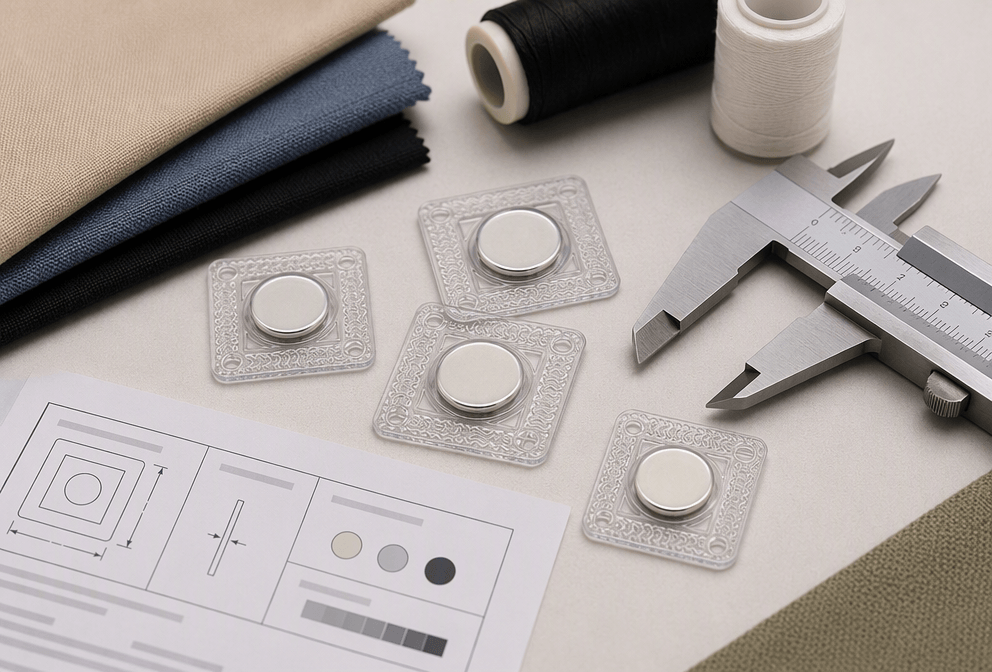
The size of custom magnetic buttons should match the garment thickness, fabric strength, fastening position, and desired appearance. Common diameters for custom button magnets range from 10 mm to 25 mm, covering lightweight shirts, coats, down jackets, outdoor windbreakers, bags, and other apparel applications.
Round magnetic buttons are the most common option, while block or special shapes can be customized for specific garment designs. In addition to outer diameter, buyers should also confirm:
- Button thickness
- Magnet core thickness
- Hidden installation size
- Sew-in or embedded structure
- Concave-convex assembly design if required
- Finished button profile after installation
For lightweight garments, ultra-flat magnetic buttons around 2 mm thick can help reduce bulging. For thicker fabrics or high-stress fastening positions, reinforced structures around 3 mm thick may improve pull resistance and stability.
1.2 Color and cover design
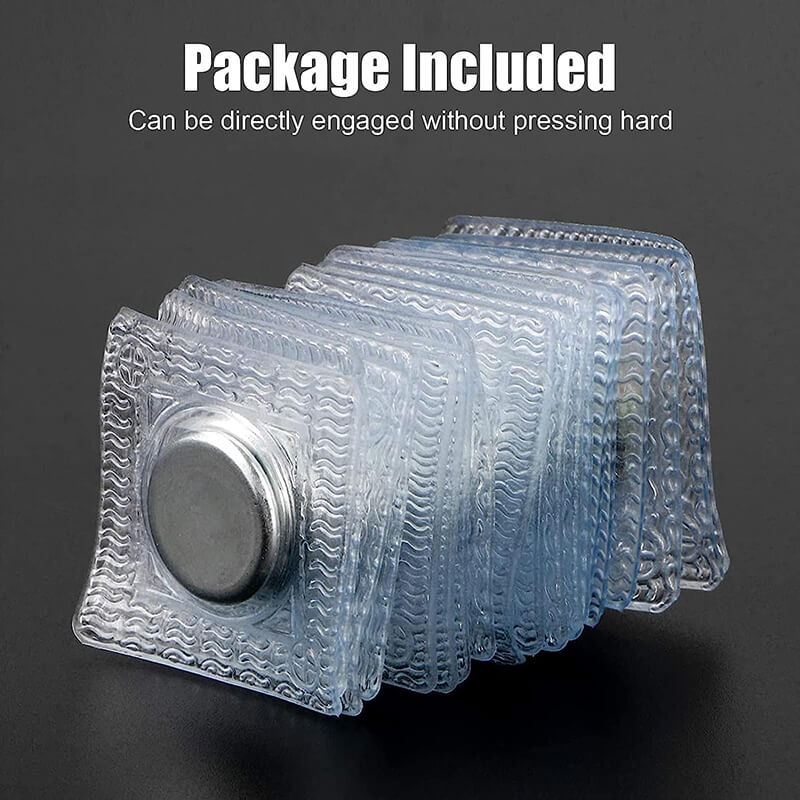
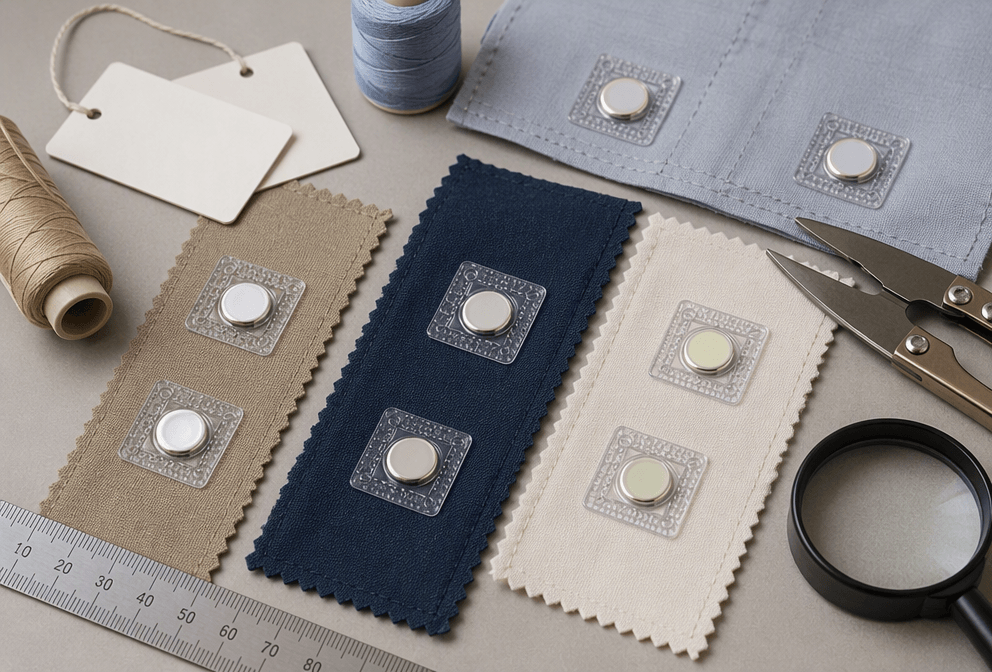
The outer cover color should match the garment design and installation method. For hidden sew-in magnetic buttons, transparent and black plastic covers are common choices. Transparent covers are often used when the button needs to be discreet under fabric, while black covers may be selected for dark garments or functional apparel.
If the magnetic button will be visible on the finished garment, the surface color, coating, texture, and edge finish should be confirmed before sampling.
1.3 Logo customization
For visible magnetic button hardware, logo customization can support brand recognition. Laser engraving on a metal casing is one of the common methods for adding a brand logo. Buyers should provide vector files such as AI, PDF, or CDR to ensure clean engraving and accurate proportions.
Before production, the supplier should confirm logo size, engraving depth, surface position, and whether the logo remains clear after washing, rubbing, or long-term use.
1.4 Magnetic performance and functional requirements
Magnetic force is the core performance factor of custom button magnets. Different garments require different fastening strengths:
- Light magnetic force: Suitable for thin daily clothing and easy opening.
- Medium magnetic force: Suitable for coats, casual garments, and general apparel.
- Strong magnetic force: Suitable for outdoor windproof clothing, bags, and thick garments where accidental opening must be reduced.
A professional supplier should control magnetic force fluctuation within a reasonable range, commonly within 10%, so the opening and closing feel remains consistent across bulk products.
Buyers should also confirm the installation method. Common options include sew-in magnetic buttons and hot-press or embedded magnetic button structures. The best choice depends on the buyer’s garment production process, fabric structure, and required durability.
2. Standard sampling process and lead time
Sampling is necessary before bulk ordering custom magnetic buttons for clothes. It helps verify product structure, appearance, magnetic force, installation fit, and fabric compatibility.
2.1 Sampling procedure
A standard sampling process usually includes the following steps:
- Specification confirmation and document review: The buyer provides size, shape, color, logo, magnetic force, installation method, drawings, and functional requirements. The supplier reviews production feasibility and prepares a specification confirmation sheet.
- Prototype production: The sample workshop produces prototypes according to the confirmed specifications. For non-standard shapes, this may include mold opening, process debugging, surface treatment, logo processing, and magnetic core assembly.
- Initial sample inspection: Samples are checked for dimensional accuracy, magnetic force stability, surface finish, logo clarity, edge smoothness, and assembly firmness before shipment.
- Sample delivery and buyer confirmation: The buyer tests the samples on real fabric or garment prototypes. After confirming fastening performance, appearance, and installation fit, the buyer can approve the sample for bulk production.
2.2 Sampling lead time
Sampling time depends on whether the design uses an existing mold or requires new tooling.
| Sample type | Typical lead time | Suitable for |
|---|---|---|
| Standard size, existing mold, common color or logo | 7-9 days | Most regular custom magnetic button projects |
| Special shape, new mold, custom color or complex logo | 12-15 days | Non-standard garment hardware development |
| Urgent sample request | Case by case | Time-sensitive apparel projects |
Urgent sampling may be supported depending on current production capacity and material availability.
2.3 Sampling cost rules
For standard designs, sample costs may be reduced or waived for formal bulk order customers, while freight is usually paid by the buyer. For special shapes, exclusive tooling, or complex custom processes, a one-time mold fee may be required.
In many projects, part or all of the mold fee can be deducted from a later bulk order if the order quantity reaches the agreed threshold. This rule should be confirmed in the quotation before sampling begins.
3. MOQ for bulk custom magnetic buttons
MOQ is a key concern for apparel startups, small garment factories, and brands launching a new product line. MOQ depends on whether the design uses standard materials and existing molds or requires non-standard customization.
3.1 Standard magnetic button orders
For conventional standard sizes and common colors, some suppliers can support small trial orders or flexible MOQ policies. This helps buyers test the market, develop prototypes, or produce small-batch garments without high inventory pressure.
3.2 Non-standard customized orders
For special-shaped molds, plastic cover color matching, complex logo customization, or exclusive structures, the MOQ is usually higher because of tooling, process debugging, and material preparation costs.
A typical MOQ range for non-standard custom magnetic buttons is 5,000-10,000 pairs, depending on the design complexity and production process.
3.3 Large-scale bulk orders
Orders above 10,000 pairs usually receive more flexible pricing and production support. Large orders are suitable for mature garment styles, long-term apparel programs, or repeated seasonal production.
Before placing an order, buyers should ask the supplier to confirm MOQ, sample rules, bulk pricing tiers, tooling cost, and delivery schedule in writing.
4. Bulk pricing logic for custom button magnets
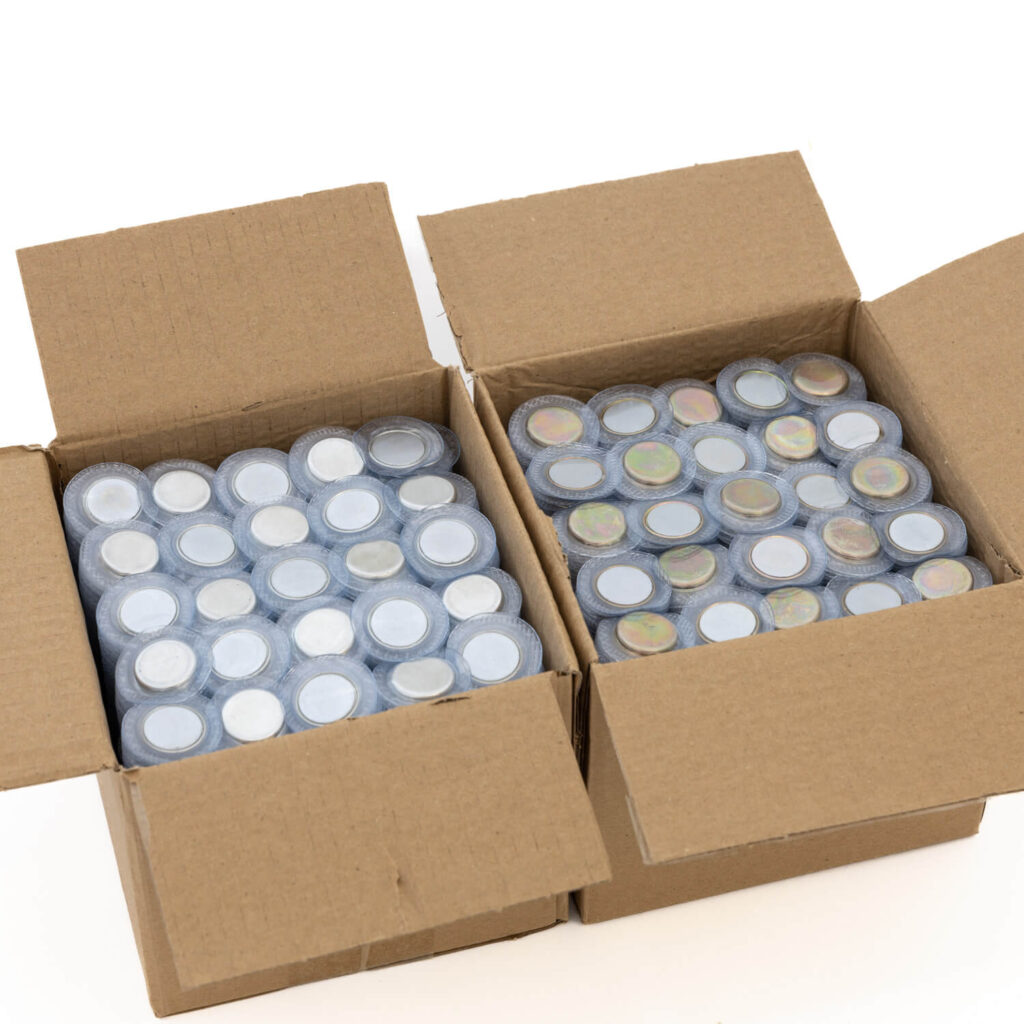
The price of custom magnetic buttons for clothes is usually based on specification difficulty, order quantity, magnetic performance, surface process, and packaging requirements.
4.1 Main pricing factors
- Customization difficulty: Standard size, color, and logo designs have lower unit costs. Special-shaped molds, multi-layer plating, 3D logo processing, and special washing-resistant structures increase cost.
- Order quantity: Unit price normally decreases as order quantity increases.
- Magnetic performance: Stronger or more stable magnetic cores may cost more, especially for high-end durable garments.
- Surface process: Anti-corrosion plating, matte anti-scratch finishes, and premium surface treatments cost more than basic spraying or standard finishing.
- Packaging and inspection requirements: Individual packing, special labels, test reports, or stricter inspection standards may affect the final quotation.
4.2 Typical bulk pricing tiers
| Order quantity | Pricing logic | Common use case |
|---|---|---|
| 1,000-4,999 pairs | Basic unit price | Trial orders and small garment batches |
| 5,000-9,999 pairs | Possible 5%-10% discount from base price | Regular brand orders and seasonal production |
| 10,000+ pairs | Factory bulk pricing and stronger production support | Mass production and long-term programs |
A professional quotation should list the material cost, process cost, mold cost, packaging cost, and any additional service fees. Clear cost breakdowns help buyers compare suppliers accurately and avoid hidden charges.
5. Quality inspection standards for bulk magnetic buttons
Quality stability is critical for bulk procurement. Custom magnetic buttons must remain reliable during garment production, wearing, pulling, washing, and long-term storage.
5.1 Raw material inspection
Raw materials should be inspected before production. Magnetic cores should have stable magnetism and low attenuation. Metal shells or covers should be checked for thickness, hardness, corrosion resistance, and surface defects.
For export apparel accessories, buyers may request materials that comply with relevant environmental requirements such as RoHS and REACH, depending on the target market and garment brand standards.
5.2 In-process inspection
During production, quality checks should be performed at key process points, including:
- Size assembly accuracy
- Magnetic core bonding firmness
- Surface flatness and coating quality
- Edge smoothness
- Logo clarity and adhesion
- Color consistency
- Assembly stability
This helps eliminate defects such as loose structures, blurred logos, uneven color, sharp edges, and unstable magnetic force before final inspection.
5.3 Finished product testing
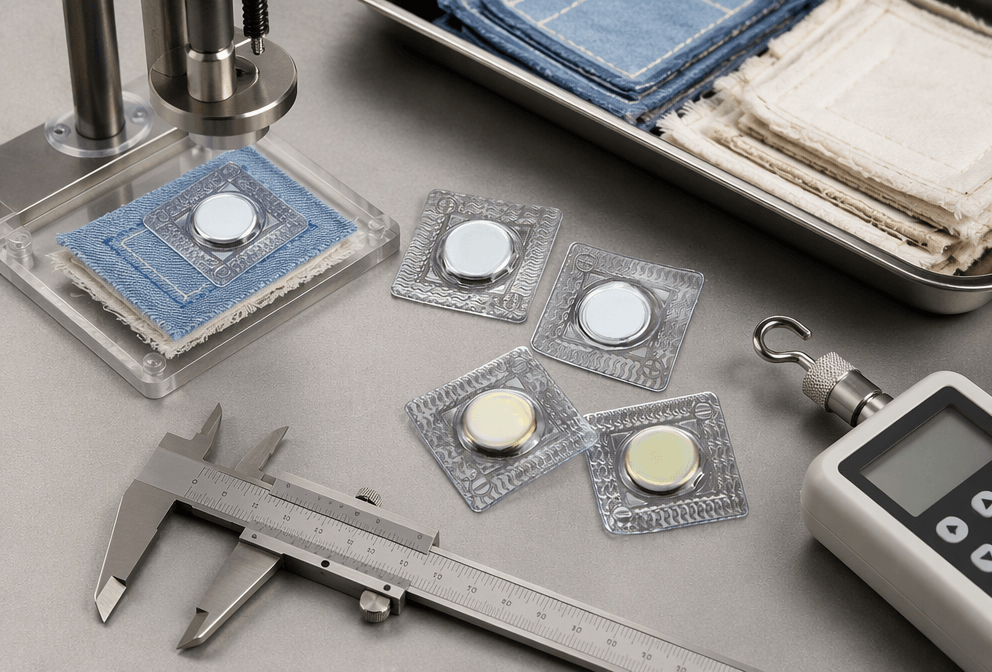
Finished magnetic buttons should be tested according to the application scenario. Common inspection items include:
- Magnetic force consistency test
Checks whether bulk products maintain consistent magnetic force, with fluctuation commonly controlled within 10% when specified. - Pull resistance test
Simulates garment pulling to verify that the button will not separate under normal use. - Salt spray corrosion test
Conventional products may be tested for 24 hours, while higher-end customized products may require 48-hour salt spray testing to reduce rust and oxidation risk. - Washing durability test
Simulates garment washing to check for magnetic failure, surface peeling, cover damage, or logo detachment. - High and low temperature resistance test
Verifies whether the magnetic button structure remains stable in different climate and storage environments.
5.4 Pre-shipment inspection
Before shipment, the supplier should conduct quantity checks, appearance inspection, functional sampling, packing confirmation, and defective product sorting. For formal bulk orders, buyers may request inspection reports, test certificates, environmental compliance documents, or video inspection support.
6. Complete bulk order process
A clear order process helps buyers control timeline, cost, and quality from development to delivery.
- Demand communication and specification confirmation
Confirm size, shape, color, logo, magnetic force, installation method, order quantity, and target application. - Quotation and technical review
The supplier provides a quotation, feasibility feedback, sampling plan, tooling cost if needed, and expected delivery schedule. - Sample making and approval
Samples are produced according to confirmed specifications. The buyer tests them on real garments or fabric swatches and approves the final sample. - Order placement and payment
Confirm the final price, delivery cycle, quality standard, packaging method, and after-sales terms before arranging payment. - Mass production and quality inspection
The supplier arranges production and performs raw material inspection, in-process inspection, and finished product testing. - Final inspection and delivery
The buyer can arrange factory inspection, video inspection, or third-party inspection if required. Goods are shipped after inspection approval. - After-sales support
A reliable supplier should help resolve quality issues, installation matching problems, and repeat order adjustments efficiently.
7. Buyer checklist before placing a bulk order
Before confirming a bulk order for custom magnetic buttons for clothes, buyers should prepare the following information:
- Product application: shirt, coat, jacket, bag, adaptive clothing, outdoor garment, or other use
- Button size and thickness
- Cover color and surface finish
- Logo file and logo position if required
- Magnetic force requirement
- Installation method: sew-in, hot-press, embedded, or other process
- Fabric thickness and garment structure
- Sample quantity and required delivery date
- Bulk order quantity and expected delivery schedule
- Required test reports or compliance documents
- Packaging and labeling requirements
Providing this information at the beginning helps the supplier give a more accurate quotation and reduces sampling revisions.
Final words
Purchasing custom magnetic buttons for clothes does not need to rely on trial and error. A successful project starts with clear specifications, realistic sampling expectations, transparent MOQ rules, structured pricing, and professional quality inspection.
By following a standardized procurement process, apparel brands and garment manufacturers can reduce development risk, improve production efficiency, and receive magnetic button fasteners that match their garment design, durability requirements, and market positioning.
HJ Magnet supports custom magnetic button solutions for clothing, bags, outdoor apparel, adaptive garments, and high-end customized products. Contact our team to discuss size, structure, magnetic force, logo, sampling, MOQ, and bulk order requirements for your next garment accessory project.