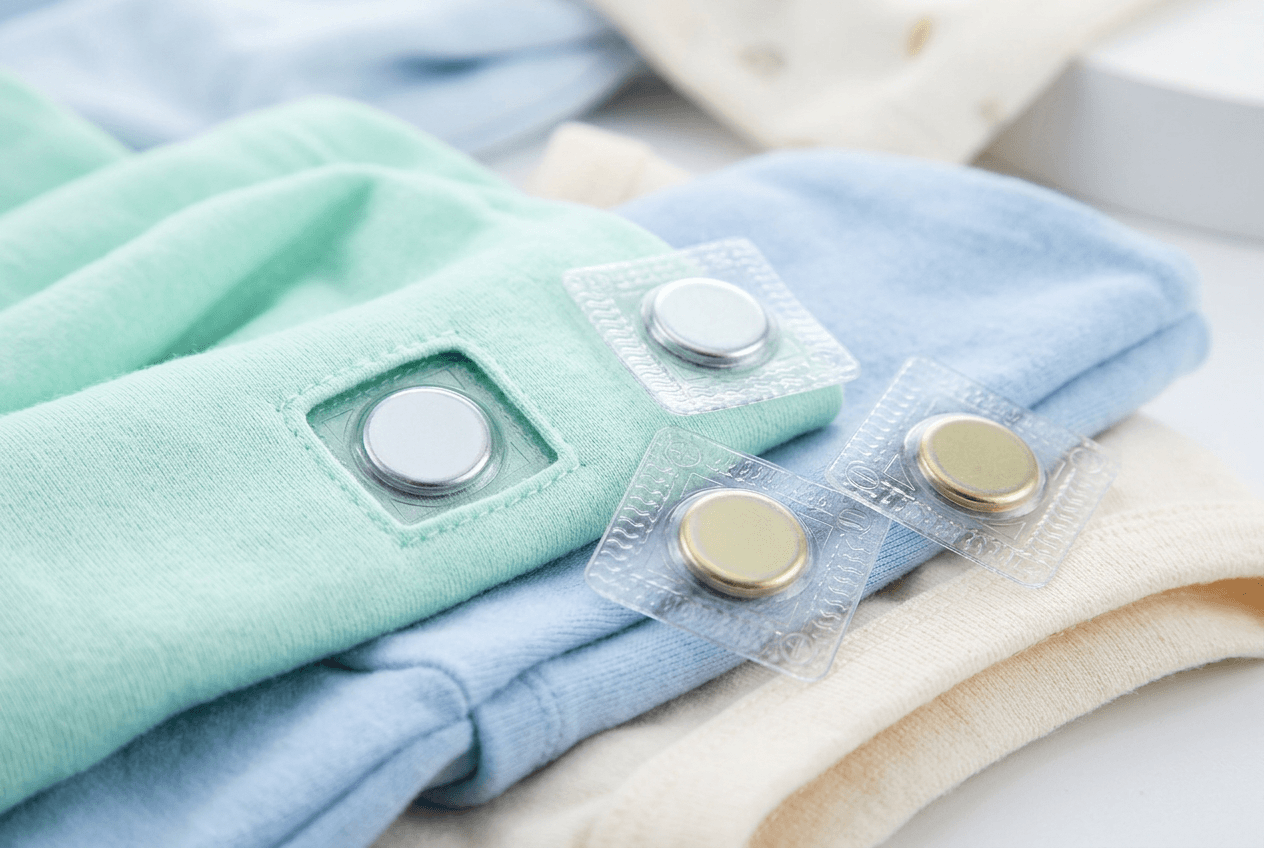
Magnetic buttons have become a practical fastening choice for modern clothing. They give garments a clean look and a smooth one-touch closing experience. Many apparel brands use them instead of visible snaps, zippers, or traditional buttons.
For garment engineers and production teams, the button itself is only one part of the decision. The installation method also matters. It affects durability, wash resistance, pull force stability, and final product consistency.
The two most common options are sew-in magnetic buttons and adhesive magnetic buttons. Each method works well in the right use case. Each method also has clear limits.
This guide compares both options in simple technical terms. It covers fabric compatibility, pull force retention, wash cycle performance, cost, and application scenarios. Use it to choose the right magnetic button installation method for your garment project.
If you are still selecting materials, you can also read our guide on PVC vs TPU magnetic buttons.
What Are Sew-In Magnetic Buttons?
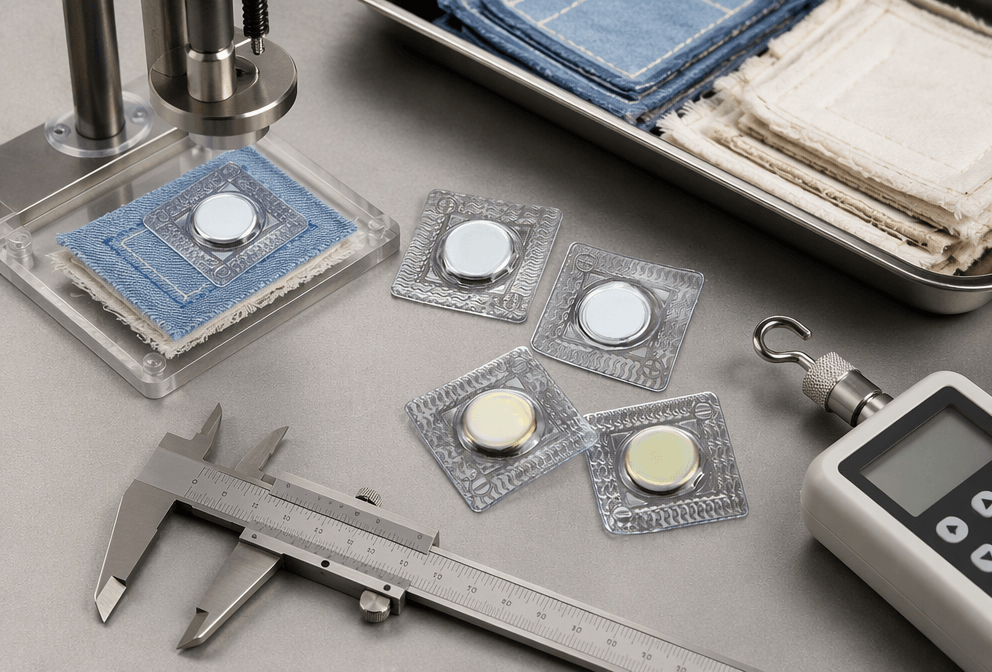
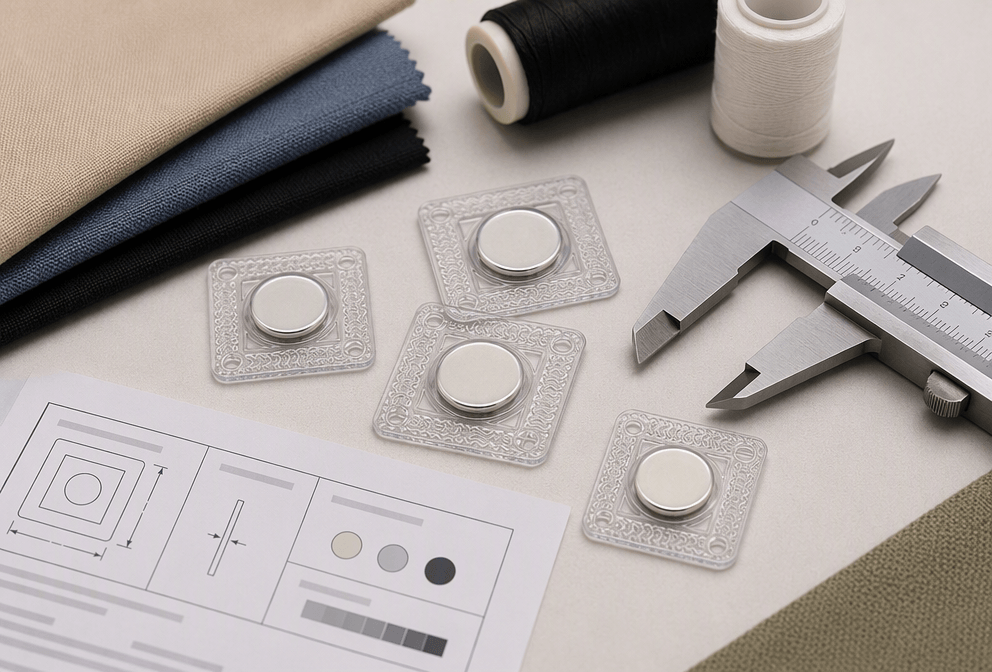
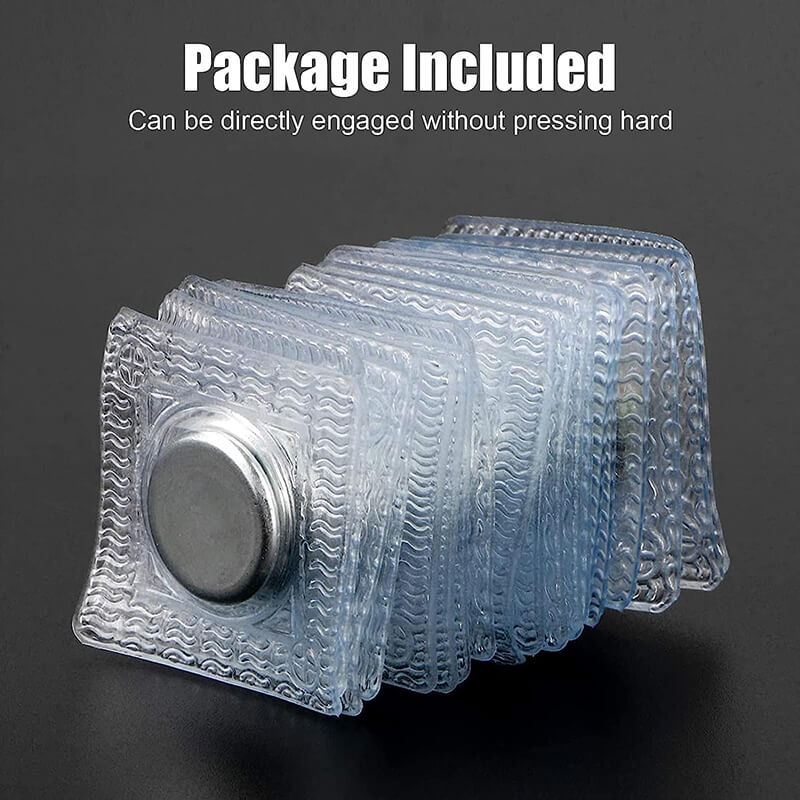
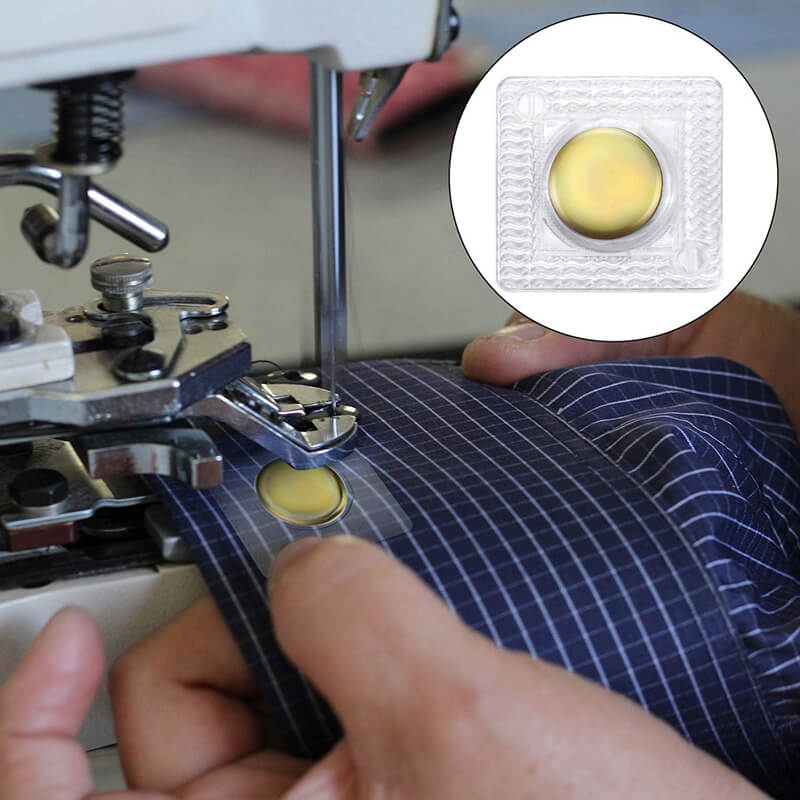
Sew-in magnetic buttons use a PVC, TPU, or fabric-covered frame with stitching holes around the edge. Workers attach the whole button to the garment by hand sewing or machine sewing.
The magnet core sits inside a protective casing. This casing helps isolate the magnet from water, detergent, and direct fabric friction. The stitching fixes the button to the garment and keeps it stable during pulling, bending, and washing.
Sew-in magnetic buttons suit garments that need a long service life. Common applications include coats, uniforms, jackets, adaptive clothing, baby wear, outdoor clothing, and reusable fashion products.
For a typical sewn garment closure, see our PVC magnetic snap button for garment closure.
What Are Adhesive Magnetic Buttons?
Adhesive magnetic buttons use a fabric-specific adhesive backing. Workers peel off the backing film and press the button onto the target fabric area. This method does not require sewing tools or stitching work.
Adhesive installation is fast. It can reduce labor time in sample making, decoration, or low-frequency-use products. However, the bonding strength depends heavily on the fabric surface. Smooth and flat fabrics support better adhesion. Rough, fluffy, coated, or elastic fabrics increase the risk of peeling.
Adhesive magnetic buttons work best for short-cycle garments, temporary decoration, accessories, display samples, or products with low washing requirements.
Quick Comparison: Sew-In Vs Adhesive Magnetic Buttons
| Factor | Sew-In Magnetic Buttons | Adhesive Magnetic Buttons |
|---|---|---|
| Installation method | Fixed by stitching | Fixed by adhesive backing |
| Best fabric type | Thick, textured, elastic, coated, or washable fabrics | Smooth, thin, low-texture fabrics |
| Durability | High | Low to medium |
| Wash resistance | Strong | Limited |
| Pull force stability | Stable under repeated use | Drops faster under bending and tension |
| Production speed | Slower | Faster |
| Labor cost | Higher | Lower |
| Best use case | Long-life garments and washable apparel | Temporary, seasonal, or low-frequency use items |
1. Fabric Compatibility
Fabric type has a direct effect on magnetic button stability. Thickness, texture, stretch, and surface flatness all influence the final result.
Sew-In Magnetic Buttons: Broad Fabric Adaptability
Sew-in installation relies on stitching. It does not depend on surface bonding. This gives it a wider fabric range.
Heavy fabrics
Sew-in magnetic buttons work well on denim, canvas, wool coat fabric, and tactical polyester. The stitches lock the button firmly into thick and stiff fabric. The button stays in place even when the garment faces repeated pulling.
Medium-weight fabrics
Cotton twill, uniform fabric, and standard jacket fabrics also match sew-in buttons well. The button stays stable without damaging the fabric structure.
Lightweight fabrics
Sew-in magnetic buttons can also work on chiffon, silk, and thin cotton when the sewing structure is designed correctly. Stitching spreads the load across the fabric. This helps reduce local tearing or warping.
Functional fabrics
Sew-in buttons can work on waterproof coated fabrics and breathable technical fabrics. For waterproof garments, choose a suitable button casing and sewing process. This helps protect both the magnet and the garment surface.
For waterproof applications, a TPU waterproof magnetic button can offer better flexibility and sealing performance.
Adhesive Magnetic Buttons: Surface Bonding Matters
Adhesive magnetic buttons need tight surface contact. Fabric texture and air gaps can weaken the bond.
Best-fit fabrics
Smooth polyester, satin, and fine cotton support better adhesive contact. These materials give the adhesive a flatter bonding surface.
Conditional fabrics
Ordinary cotton and thin linen may work if the surface is clean and flat. Pressing time, pressure, and adhesive quality all affect the result.
High-risk fabrics
Avoid adhesive magnetic buttons on thick canvas, corduroy, boucle, fleece, and fluffy textured fabrics. These fabrics create air gaps under the adhesive layer. The button may peel from the edge and fall off after short use.
Adhesive buttons are also risky on highly elastic fabrics. Stretching can break the adhesive bond and reduce holding strength.
Fabric Selection Rule
Choose sew-in magnetic buttons for thick, textured, elastic, coated, washable, or high-value fabrics.
Choose adhesive magnetic buttons only for smooth, thin, low-stretch fabrics with low durability requirements.
2. Pull Force Retention
Pull force retention shows how much holding force remains after repeated tension. It is a useful index for fastening stability.
In garment use, magnetic buttons do not only face straight pulling. They also face bending, twisting, folding, and repeated opening and closing. These actions create fatigue at the installation point.
Sew-In Magnetic Buttons: Stable Under Repeated Use
Sew-in magnetic buttons can use common neodymium magnet grades such as N35, N42, and N52. The final pull force depends on magnet grade, magnet size, casing thickness, and fabric layers.
Typical initial pull force can range from 1.2 kg to 6 kg. Lightweight garments may use lower pull force. Heavy coats, uniforms, and outdoor garments may need stronger magnetic force.
In repeated tension testing, sew-in buttons usually keep stronger retention because the stitches hold the button position. The magnet does not shift easily. The load spreads through the sewn edge.
Typical test observations:
- Static pull retention after 1,000 cycles at 50% load: about 96%–98%
- Dynamic retention under bending plus tension: about 93%–95%
This makes sew-in buttons a better choice for garments that open and close often.
Adhesive Magnetic Buttons: Good Initial Force, Weaker Fatigue Resistance
Adhesive magnetic buttons can start with the same magnetic strength as sew-in buttons if they use the same magnet grade and size. The difference appears after repeated use.
Repeated tension can create micro-peeling at the adhesive edge. Fabric bending can also stretch the adhesive layer. As the bonding area becomes smaller, the button loses effective holding strength.
Typical test observations:
- Static pull retention after 1,000 cycles at 50% load: about 75%–82%
- Dynamic retention under bending plus tension: about 62%–70%
This does not mean adhesive magnetic buttons are unusable. It means they should stay in light-duty and low-frequency applications.
Pull Force Conclusion
Sew-in magnetic buttons offer better pull force stability under daily garment use. Adhesive magnetic buttons can provide strong initial closure, but their performance drops faster under bending, washing, and repeated opening.
3. Wash Cycle Lifespan
Wash resistance has a direct impact on after-sales quality. Garments that fail after several washes can create returns, complaints, and brand damage.
Textile washing tests often refer to recognized textile test methods. You can review available procedures through AATCC Standard Test Methods and Procedures.
Sew-In Magnetic Buttons: Better Wash Durability
Sew-in magnetic buttons perform better in repeated machine washing. The stitching keeps the button in place. The protective casing helps reduce direct contact between the magnet and water.
Typical test conditions:
- 40°C conventional machine washing
- Normal detergent
- Natural air drying
- 50 continuous wash cycles
Typical result:
- Pull force retention after washing: about 91%–93%
- No obvious magnet displacement
- No major thread loosening when stitching quality is correct
- No visible rusting when the magnet casing seals properly
In many garment applications, sew-in magnetic buttons can withstand more than 80 standard wash cycles when the product design, sewing process, and casing material match the end use.
Adhesive Magnetic Buttons: Limited Wash Life
Adhesive magnetic buttons face higher risk in washing. Water, detergent, heat, fabric friction, and drum movement can weaken the adhesive layer.
Typical test observations:
- After 10 washes, edge peeling may appear.
- Pull force may drop by about 20%.
- After 20 washes, partial hollow bonding may appear.
- Pull force may drop by about 40%.
- After 25–30 washes, many adhesive buttons may fall off or fail to fasten well.
Adhesive magnetic buttons may stay stable within about 10 wash cycles in suitable conditions. They are not the best choice for garments that need long-term washing performance.
Wash Resistance Conclusion
Use sew-in magnetic buttons for washable garments, reusable apparel, uniforms, coats, and outdoor products. Use adhesive magnetic buttons only when the product has low wash frequency or short service life.
4. Pros, Cons, And Cost Factors
Sew-In Magnetic Buttons
Pros
- Strong long-term stability
- Better fatigue resistance
- Wide fabric compatibility
- Good wash resistance
- Cleaner performance for premium garments
- Lower risk of button detachment after repeated use
Cons
- Longer installation time
- Higher labor cost
- Slightly higher total assembly cost
- Requires sewing process control
Best applications
- High-end apparel
- Coats and jackets
- Uniforms
- Outdoor functional clothing
- Baby wear
- Adaptive clothing
- Washable reusable garments
- Bulk apparel production with strict quality standards
Adhesive Magnetic Buttons
Pros
- Fast installation
- No sewing required
- Lower labor cost
- Suitable for quick samples
- No visible stitching marks
- Useful for temporary decoration
Cons
- Strict fabric limits
- Weak performance on textured fabric
- Lower wash resistance
- Faster pull force loss under bending
- Higher risk of peeling and detachment
Best applications
- Fast fashion items
- Seasonal garments
- Temporary decorative closures
- Non-washable accessories
- Trial samples
- Low-frequency use products
If you need custom specifications for bulk production, read our guide on custom magnetic buttons for clothes.
5. Installation Method Selection Checklist
Use this checklist before you confirm the magnetic button structure.
Choose sew-in magnetic buttons if:
- The fabric is thick, textured, elastic, coated, or waterproof.
- The garment needs more than 15 wash cycles.
- The closure will open and close often.
- The product targets premium or long-term use.
- The garment needs stable pull force after repeated bending.
- The brand wants to reduce after-sales quality risk.
Choose adhesive magnetic buttons if:
- The fabric is smooth, thin, and low-stretch.
- The product has low washing requirements.
- The closure is mainly decorative.
- The product has a short use cycle.
- Fast assembly matters more than long-term durability.
- You need a quick sample or temporary fixing solution.
For a broader overview of apparel magnetic closures, visit our magnetic buttons for clothing buyer’s guide.
6. Common Mistakes To Avoid
Mistake 1: Using Adhesive Buttons On Rough Fabric
Rough fabric reduces the real contact area between the adhesive and the garment. This often causes edge peeling. For canvas, fleece, corduroy, boucle, and wool-like textures, sew-in installation is safer.
Mistake 2: Choosing Pull Force Without Considering Fabric Layers
A stronger magnet is not always better. If the pull force is too high for thin fabric, the user may pull the garment too hard when opening the button. This can damage the fabric. Match the magnet grade and size to fabric thickness and user behavior.
Mistake 3: Ignoring Washing Requirements
Many fastening failures happen after washing, not during the first fitting test. If the garment will enter normal machine washing, test the button with the real fabric and sewing structure before bulk production.
Mistake 4: Treating Samples And Bulk Production The Same Way
A sample may pass a quick hand test. Bulk production needs repeatable quality. Sewing position, thread tension, casing quality, adhesive pressure, and storage conditions can all affect the final result.
7. Final Recommendation
Sew-in and adhesive magnetic buttons serve different garment needs.
Sew-in magnetic buttons are the stronger choice for durable apparel. They offer better fabric compatibility, better wash resistance, and more stable pull force. They suit garments that need long service life and consistent quality.
Adhesive magnetic buttons are a faster and lower-cost option for light-duty use. They work best on smooth fabrics and short-cycle products. They are not ideal for washable, textured, elastic, or heavy garments.
For most professional apparel projects, sew-in magnetic buttons provide a safer long-term result. Adhesive magnetic buttons can still add value in samples, seasonal products, and low-frequency closures.
If you need help choosing the right size, magnet grade, casing material, or installation method, HUAJIN Magnets can support custom design and bulk production as a custom neodymium magnet manufacturer.
Suggested FAQ Section
Are sew-in magnetic buttons better than adhesive magnetic buttons?
Sew-in magnetic buttons are better for washable and long-life garments. They stay more stable under repeated pulling, bending, and washing. Adhesive magnetic buttons are better for quick installation and temporary use.
Can adhesive magnetic buttons be washed?
Some adhesive magnetic buttons can handle limited washing, but they are not ideal for repeated machine wash cycles. Water, detergent, and fabric friction can weaken the adhesive layer.
What fabric works best with adhesive magnetic buttons?
Smooth, thin, and low-texture fabrics work best. Satin, fine cotton, and smooth polyester usually provide better adhesive contact than rough or fluffy fabrics.
What fabric works best with sew-in magnetic buttons?
Sew-in magnetic buttons work on a wide range of fabrics, including denim, canvas, cotton twill, wool coat fabric, waterproof fabric, and many lightweight materials.
Which magnetic button is better for coats and uniforms?
Sew-in magnetic buttons are usually better for coats and uniforms. These garments need stronger durability, better wash resistance, and more stable fastening performance.