As industries continue to pursue higher energy efficiency, greater power density, and lower operating costs, electric motor technology is evolving rapidly. One of the most important innovations driving this transformation is the use of permanent magnets.
Permanent magnets improve motor efficiency by providing a stable magnetic field without requiring continuous electrical excitation. This technology has become increasingly important in electric vehicles (EVs), industrial automation systems, robotics, drones, and household appliances.
In this article, we explore how permanent magnets improve motor efficiency and why permanent magnet motors are becoming the preferred solution across multiple industries.
The Challenges Facing Traditional Electric Motors
Traditional induction motors have powered industrial equipment for decades. While reliable, they face several limitations.
Energy Loss
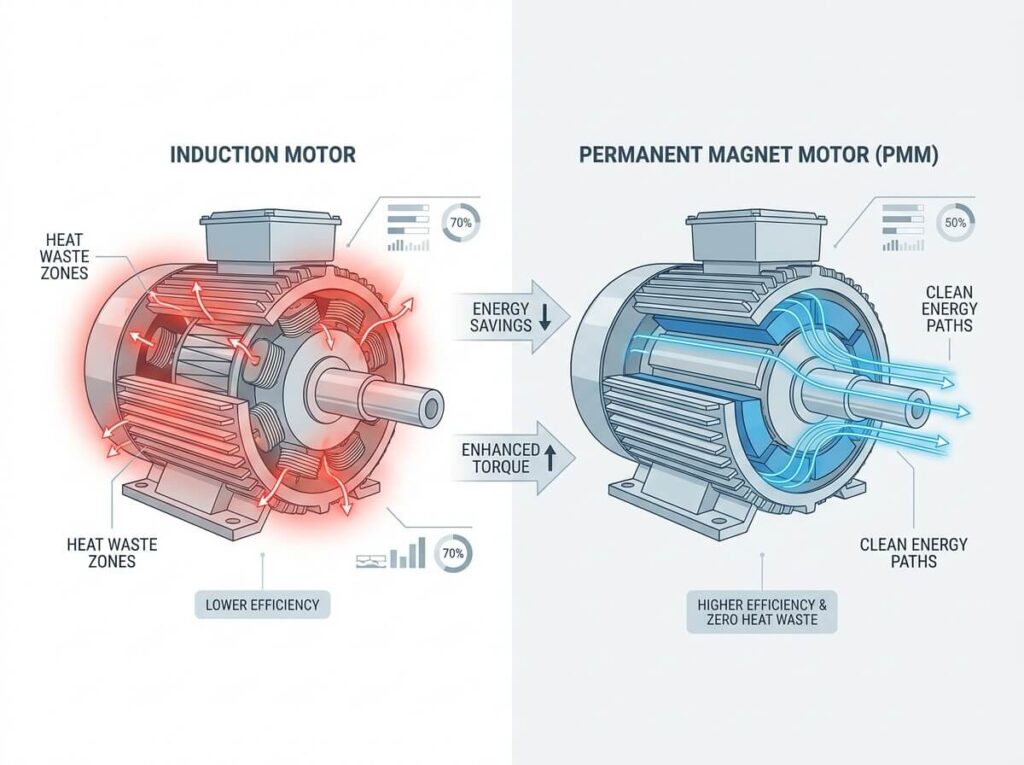
Conventional motors must continuously consume electrical energy to generate a magnetic field. This excitation process creates additional power losses and reduces overall efficiency.
Lower Torque Density
To achieve higher torque output, traditional motors often require larger stators, larger rotors, and additional copper windings, resulting in increased size and weight.
Heat Generation
The excitation current required to create magnetic fields generates heat. Under heavy loads, excessive heat can reduce motor performance and shorten service life.
Rising Material Costs
Improving motor performance often requires more copper, steel, and complex structures, increasing manufacturing costs.
These challenges have accelerated the adoption of permanent magnet motor technology.
How Permanent Magnets Change Motor Design
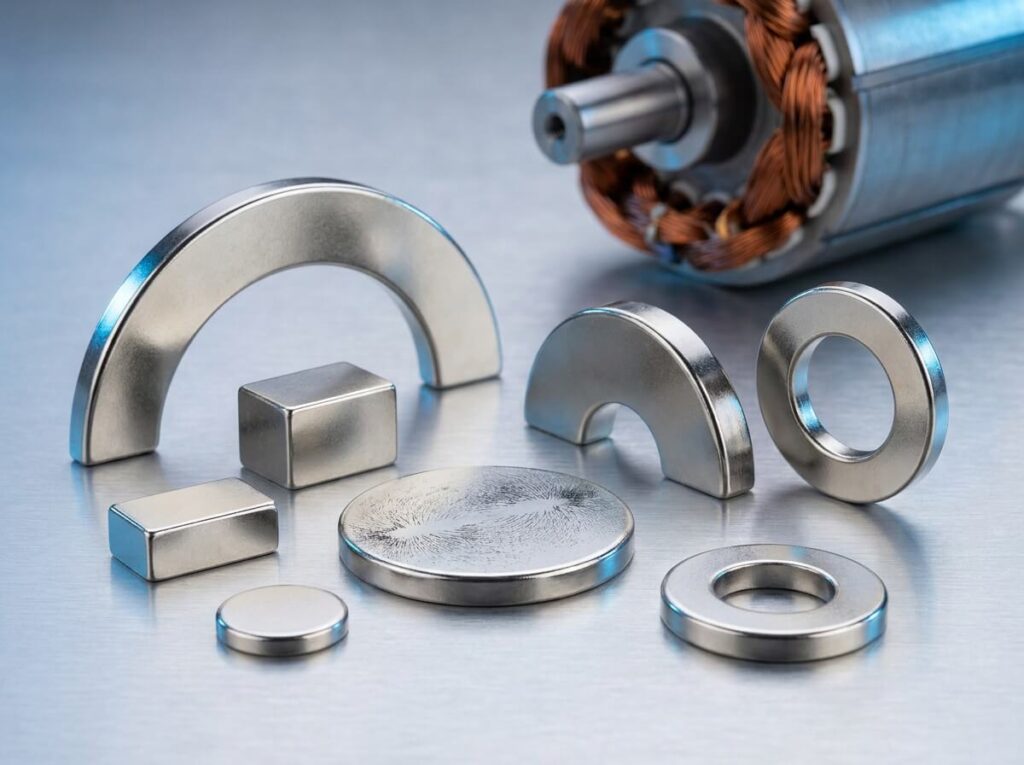
The key difference between traditional motors and permanent magnet motors lies in their magnetic field source.
Traditional motors generate magnetic fields electrically.
Permanent magnet motors use naturally magnetic materials such as NdFeB (Neodymium Iron Boron) magnets to create a strong and stable magnetic field.
Because the magnetic field already exists, the motor no longer needs to consume additional energy to establish excitation.
This fundamental change leads to:
- Higher efficiency
- Lower energy consumption
- Reduced heat generation
- Increased power density
- More compact motor designs
Why Permanent Magnets Improve Motor Efficiency
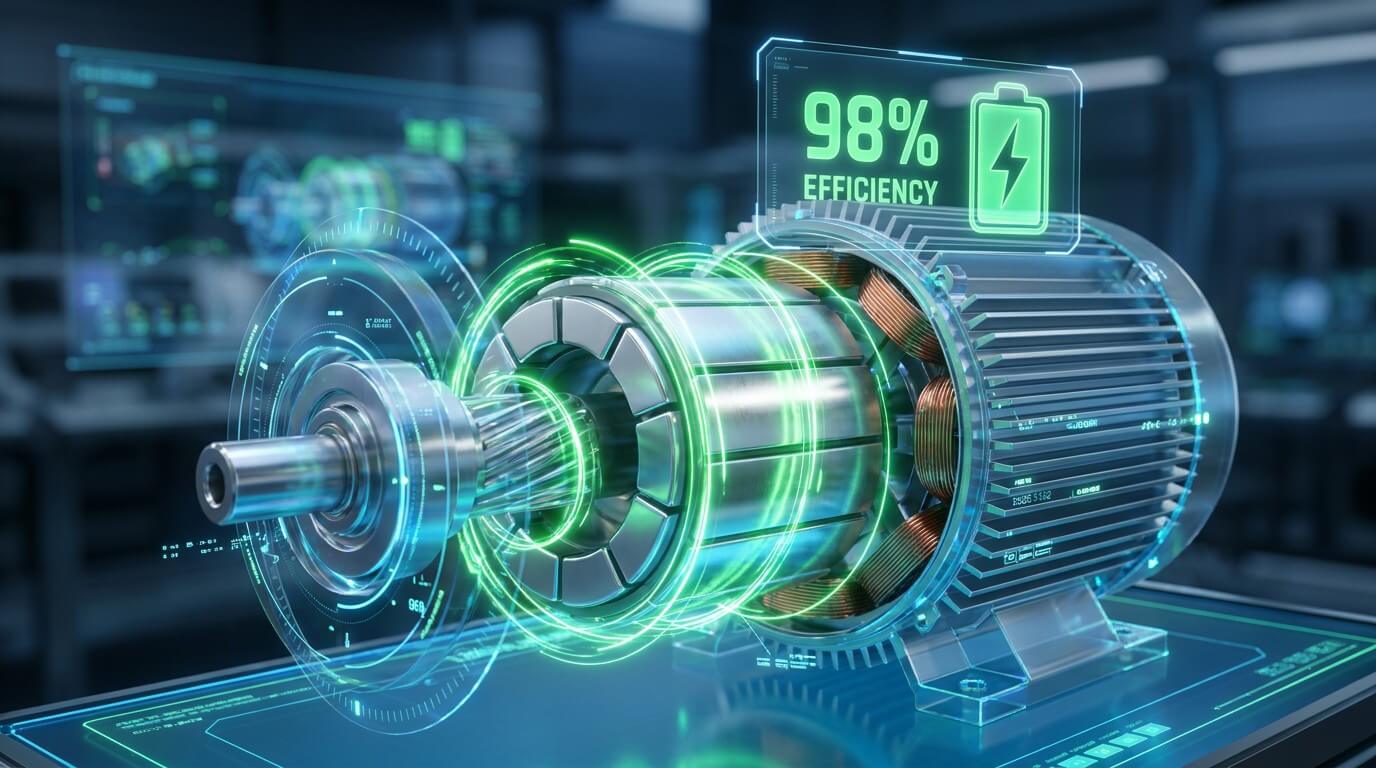
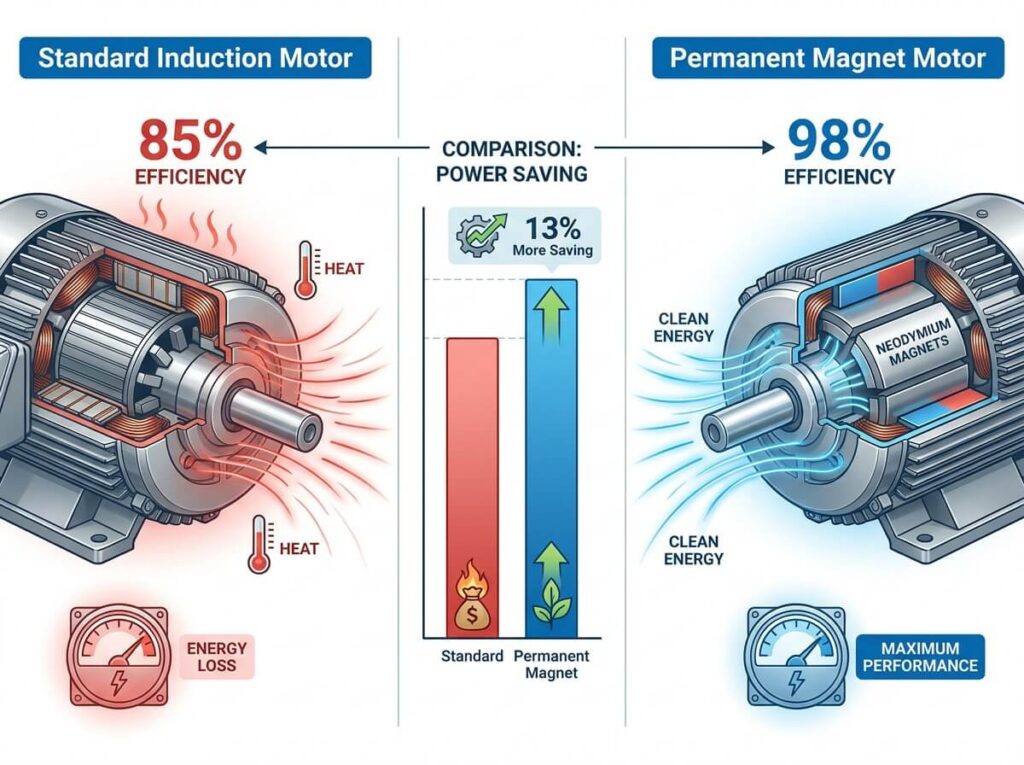
Permanent magnets improve motor efficiency by eliminating excitation losses.
A useful analogy is that traditional motors must simultaneously “create the magnetic field and produce motion,” while permanent magnet motors already have the magnetic field available.
As a result:
- More electrical energy is converted into mechanical output.
- Less energy is wasted.
- Motor efficiency increases significantly.
This advantage becomes especially important in:
- Electric vehicles
- Industrial robots
- Servo motors
- Automated manufacturing equipment
Applications that frequently accelerate, decelerate, or operate at variable speeds benefit the most.
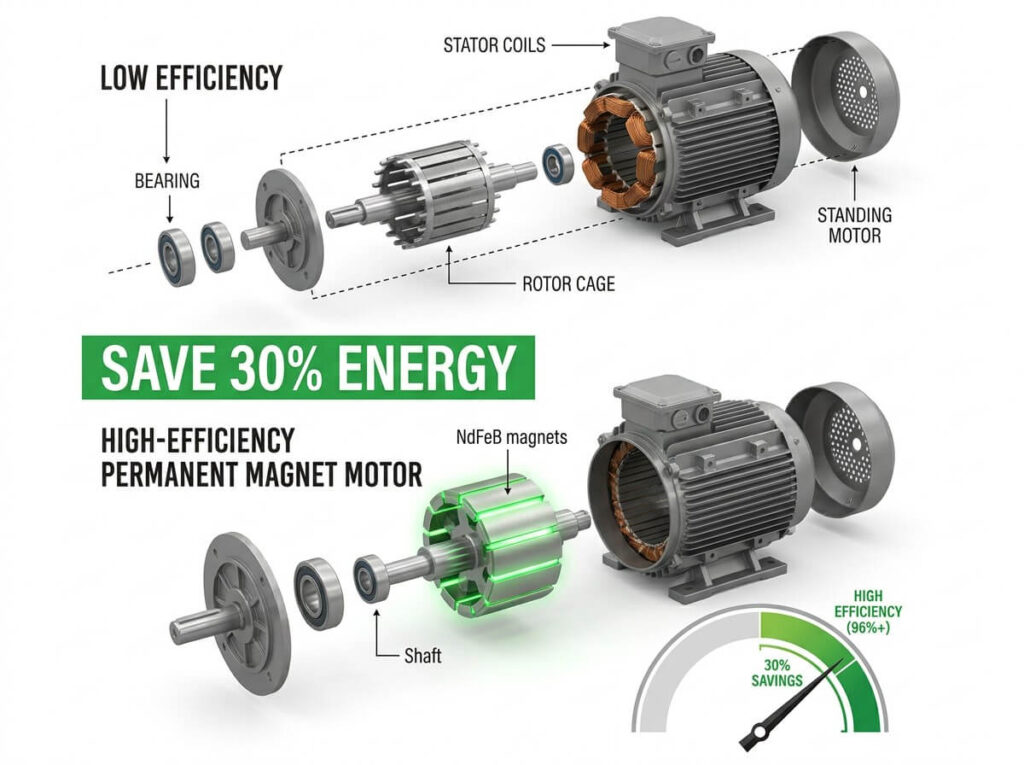
Higher Torque Density with Smaller Motor Size
One of the greatest advantages of permanent magnet motors is their exceptional torque density.
NdFeB magnets generate a much stronger magnetic field than conventional motor structures can achieve through electrical excitation alone.
This allows engineers to:
- Reduce motor dimensions
- Lower motor weight
- Increase output torque
- Improve system integration
For electric vehicles, smaller motors free up valuable vehicle space and improve overall system efficiency.
In robotics, compact motors enable lighter, more agile designs.
How Permanent Magnets Help Reduce Heat Generation
Heat is one of the biggest enemies of motor performance.
In traditional motors, a significant portion of electrical energy is consumed by generating magnetic fields, which creates heat.
Permanent magnet motors reduce this burden because the magnetic field is supplied directly by the magnet.
Benefits include:
- Lower operating temperatures
- Reduced cooling requirements
- Higher continuous power output
- Improved reliability
Modern cooling technologies, such as liquid cooling and oil cooling, further enhance performance.
However, permanent magnets themselves can be affected by extreme temperatures.
To prevent demagnetization, motor manufacturers typically use:
- Advanced cooling systems
- Optimized magnetic circuit designs
- Intelligent motor control systems
- High-temperature permanent magnet grades
The Cost Challenges of Permanent Magnet Motors
Despite their advantages, permanent magnet motors still face cost challenges.
Most high-performance permanent magnets rely on rare earth materials such as:
- Neodymium (Nd)
- Praseodymium (Pr)
- Dysprosium (Dy)
- Terbium (Tb)
Because these materials are subject to supply chain fluctuations, magnet prices can vary significantly.
To reduce costs, manufacturers are focusing on:
Improved Magnetic Circuit Design
Optimized motor designs require less magnetic material while maintaining performance.
Higher Magnet Performance
Advanced magnet grades provide stronger magnetic fields with smaller volumes.
Rare Earth Recycling
Recovered rare earth materials help reduce dependence on primary mining.
Large-Scale Manufacturing
Growing demand for EVs and industrial automation continues to reduce unit production costs.
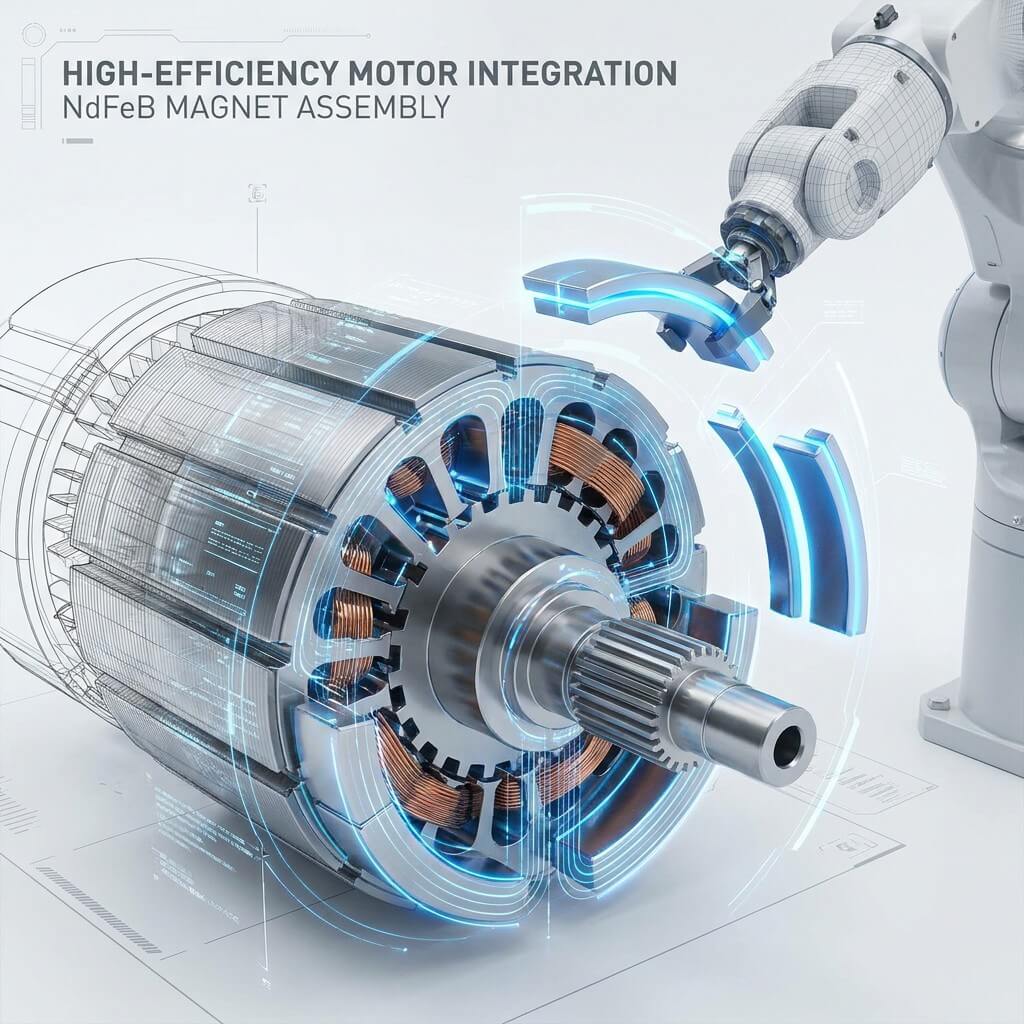
Applications of Permanent Magnet Motors
Permanent magnet motors are widely used in modern industries.
Electric Vehicles
Permanent Magnet Synchronous Motors (PMSM) are commonly used in EV drive systems because of their high efficiency and torque density.
Industrial Automation
Servo motors and robotic systems rely heavily on permanent magnet technology.
Drones and UAVs
Lightweight permanent magnet motors improve flight performance and battery life.
Household Appliances
Washing machines, air conditioners, and vacuum cleaners increasingly utilize permanent magnet motors.
Aerospace Applications
Electric propulsion systems for future aircraft are expected to benefit significantly from permanent magnet technologies.
Future Trends in Permanent Magnet Technology
Research and development continue to improve motor efficiency and reduce dependence on critical rare earth materials.
Future innovations include:
- High-temperature permanent magnets
- Rare-earth-reduced magnet designs
- Advanced motor cooling systems
- Recycled magnetic materials
- Higher efficiency motor architectures
As electrification expands globally, permanent magnet technology will remain a cornerstone of modern motor development.
Conclusion
Permanent magnets improve motor efficiency by providing a stable magnetic field without continuous electrical excitation. This allows electric motors to achieve higher efficiency, greater torque density, lower heat generation, and more compact designs.
From electric vehicles and robotics to industrial automation and aerospace systems, permanent magnet motors are helping industries achieve new levels of performance and energy efficiency.
As magnet materials and motor technologies continue to evolve, permanent magnet motors will play an increasingly important role in the future of electrification.
Frequently Asked Questions
Why do permanent magnets improve motor efficiency?
Permanent magnets eliminate excitation losses by providing a constant magnetic field, allowing more electrical energy to be converted into mechanical power.
What magnets are commonly used in permanent magnet motors?
NdFeB (Neodymium Iron Boron) magnets are the most widely used due to their high magnetic strength and energy density.
Are permanent magnet motors used in electric vehicles?
Yes. Most modern electric vehicles use Permanent Magnet Synchronous Motors (PMSM) because of their high efficiency and compact size.
Can high temperatures damage permanent magnets?
Yes. Excessive temperatures can reduce magnetic performance and may cause demagnetization if proper thermal management is not implemented.
Are permanent magnet motors more expensive?
Initially, yes. However, their higher efficiency and lower operating costs often provide long-term economic benefits.