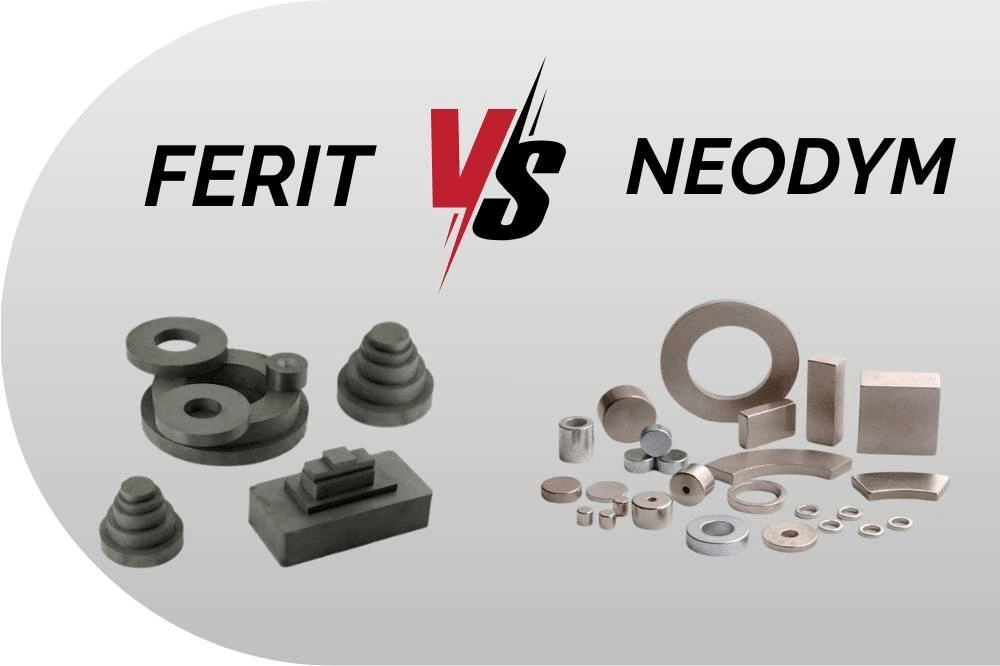

NdFeB magnets, also known as Neodymium Magnets, are the strongest permanent magnets available today. They are widely used in electric motors, robotics, wind turbines, medical devices, and consumer electronics.
However, temperature has a major impact on magnetic performance. If the operating temperature exceeds the magnet’s limit, the magnet may lose part of its magnetic force or become permanently demagnetized.
At Huajin Magnetics, we manufacture customized NdFeB magnet solutions for different industrial environments. This article explains the temperature limits of NdFeB magnets and how to choose the right grade for your application.
1. Standard Operating Temperature of NdFeB Magnets
Different NdFeB magnet grades can withstand different temperatures.
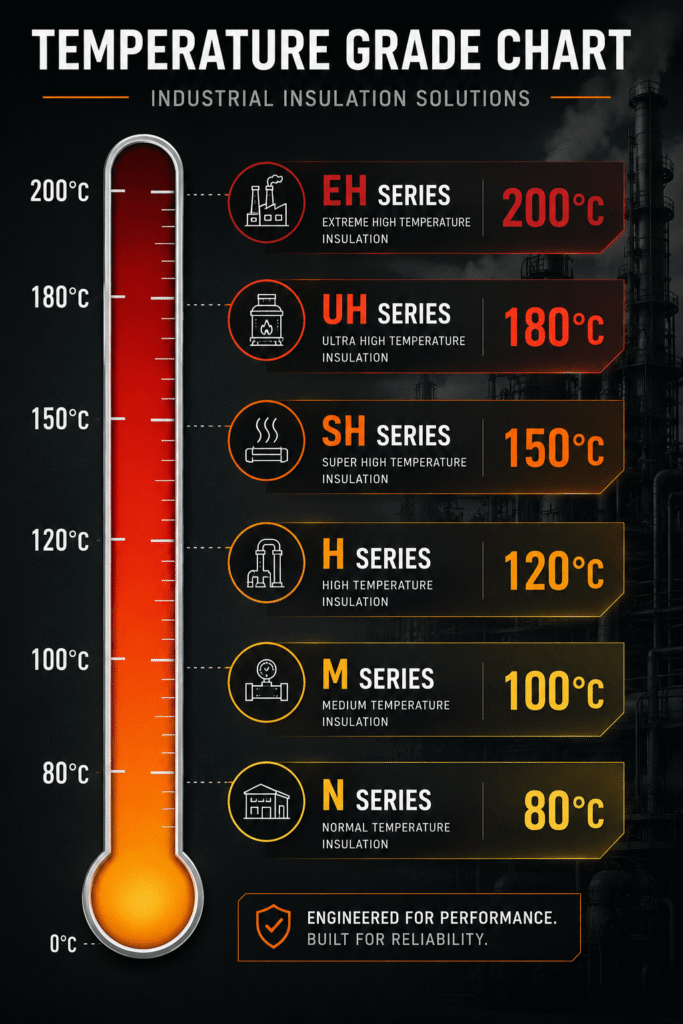
The standard operating temperature of common neodymium magnets usually ranges from:
80°C to 200°C
The exact limit depends on the magnet grade and material composition.
Below is a common temperature classification for NdFeB magnets:
| Magnet Grade | Maximum Operating Temperature |
| N Series | 80°C |
| M Series | 100°C |
| H Series | 120°C |
| SH Series | 150°C |
| UH Series | 180°C |
| EH Series | 200°C |
Higher-temperature grades contain special alloy compositions that improve thermal stability.
2. What Happens When NdFeB Magnets Overheat?
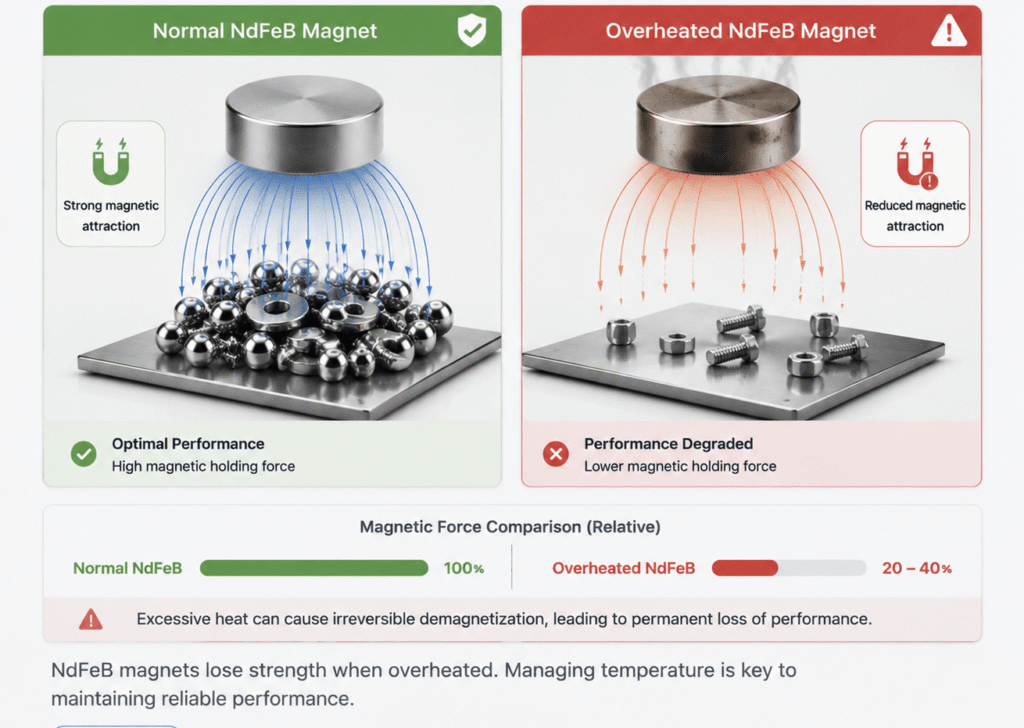
Excessive heat can weaken magnetic performance.
When NdFeB magnets exceed their recommended operating temperature, several problems may occur:
- Reduced magnetic force
- Partial demagnetization
- Permanent magnetic loss
- Structural damage in extreme conditions
In high-temperature environments, magnetic domains inside the material become unstable. This reduces the magnet’s ability to maintain strong magnetic performance.
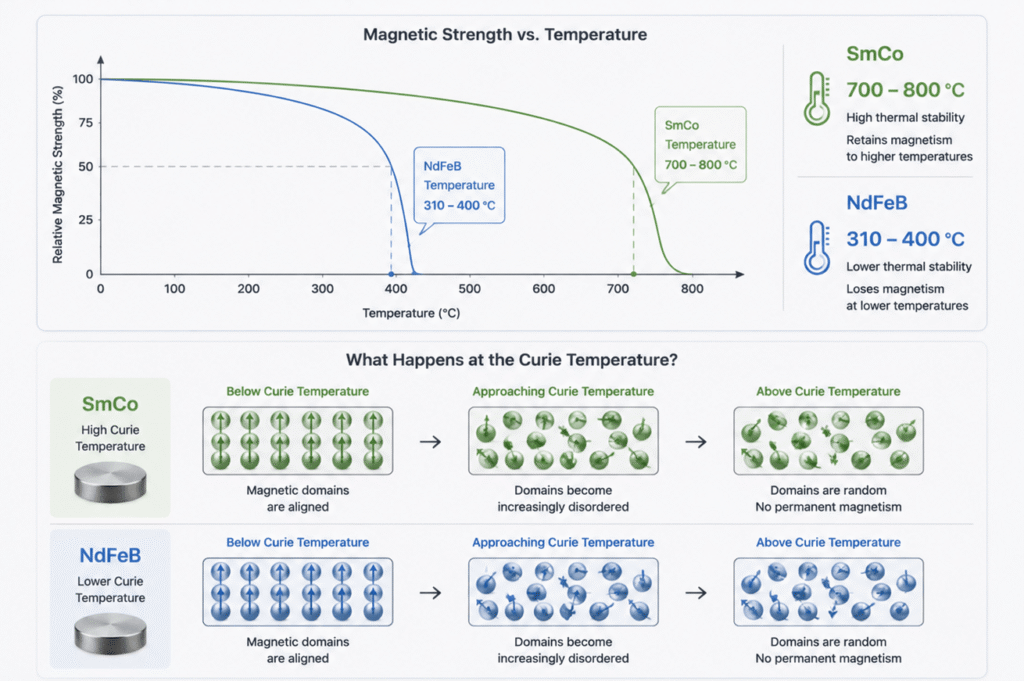
Once the temperature reaches the Curie Temperature, the magnet completely loses magnetism.
3. What Is the Curie Temperature of NdFeB Magnets?
The Curie Temperature is the temperature at which a magnet loses its magnetic properties entirely.
For most NdFeB magnets, the Curie Temperature ranges between:
310°C and 400°C
However, magnets should never be operated near the Curie Temperature during normal use.
Industrial applications usually require a large safety margin to ensure long-term magnetic stability.
4. Factors That Affect Temperature Resistance
Several factors influence the temperature performance of NdFeB magnets.
Magnet Grade
High-temperature grades such as SH, UH, and EH provide better thermal resistance.
Magnet Size and Shape
Thin or small magnets may lose heat stability faster than larger magnets.
Magnetic Circuit Design
Poor magnetic circuit design increases demagnetization risk under high temperatures.
External Magnetic Fields
Strong opposing magnetic fields can accelerate magnetic loss.
Surface Coating
Protective coatings help reduce corrosion caused by heat and humidity.
At Huajin Magnetics, we help customers select the correct NdFeB grade based on actual operating conditions.

5. High-Temperature NdFeB Magnets
Many industrial systems require magnets that can operate under elevated temperatures.
High-temperature NdFeB magnets are commonly used in:
- Electric vehicle motors
- Industrial automation systems
- Wind turbine generators
- Aerospace equipment
- High-speed motors
- Medical devices
These applications require stable magnetic performance under continuous heat exposure.
Although SmCo magnets offer better extreme-temperature resistance, high-grade NdFeB magnets often provide a better balance between cost and magnetic strength.
6. How to Improve NdFeB Magnet Temperature Stability
Manufacturers can improve heat resistance using several methods.
Choose High-Temperature Grades
Using SH, UH, or EH grades improves thermal performance significantly.
Optimize Magnet Design
Proper magnet size and magnetic circuit design reduce heat-related demagnetization.
Apply Protective Coatings
Nickel, epoxy, and zinc coatings improve durability in hot and humid environments.
Reduce Direct Heat Exposure
Thermal insulation and cooling systems help protect magnets in motors and industrial equipment.
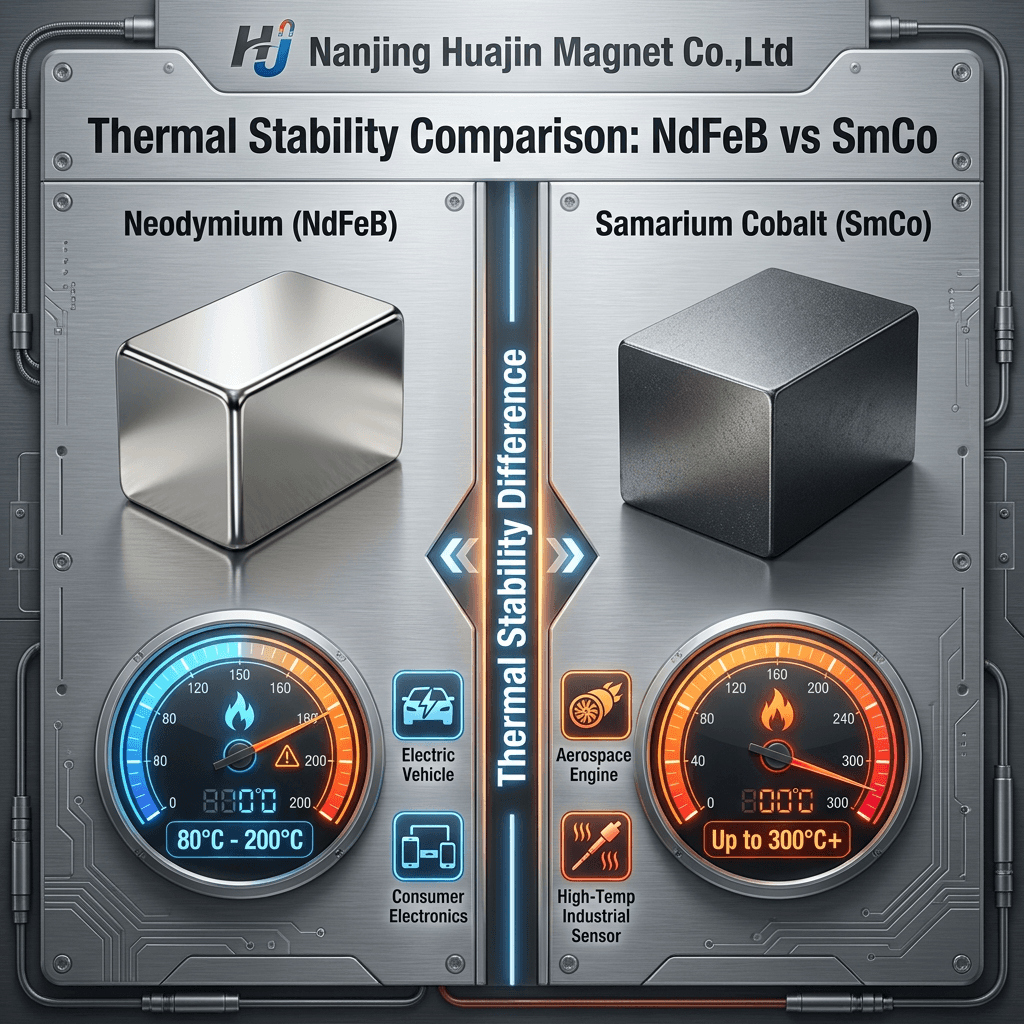
7. NdFeB vs SmCo Temperature Resistance
SmCo magnets generally provide better thermal stability than NdFeB magnets.
Comparison overview:
| Magnet Type | Maximum Operating Temperature |
|---|---|
| NdFeB Magnet | 80°C–200°C |
| SmCo Magnet | Up to 300°C |
However, NdFeB magnets provide much stronger magnetic force and better cost-performance for most industrial applications.
That is why NdFeB magnets remain the preferred choice in EV motors, electronics, and automation systems.
8. Choosing the Right NdFeB Magnet Grade
Selecting the correct magnet grade is critical for long-term reliability.
When choosing a neodymium magnet, engineers should consider:
- Operating temperature
- Humidity and corrosion conditions
- Magnetic force requirements
- Product size limitations
- Motor speed and load conditions
At Huajin Magnetics, we provide customized NdFeB magnet solutions for OEM and industrial applications worldwide.
Why Choose Huajin Magnetics?
Huajin Magnetics specializes in high-performance magnetic materials and industrial magnetic solutions.
We provide:
- NdFeB magnets
- High-temperature magnets
- SmCo magnets
- Magnetic assemblies
- OEM & ODM manufacturing
- Precision engineering support
Our engineering team helps customers select the right magnetic solution for demanding industrial environments.
Conclusion
NdFeB magnets can typically withstand temperatures from 80°C to 200°C, depending on the magnet grade.
High-temperature grades such as SH, UH, and EH provide improved thermal stability for demanding industrial systems.
Understanding temperature limitations helps engineers prevent magnetic loss and improve long-term equipment reliability.
If you need customized high-temperature NdFeB magnet solutions, Huajin Magnetics can support your project with professional engineering and manufacturing expertise.