
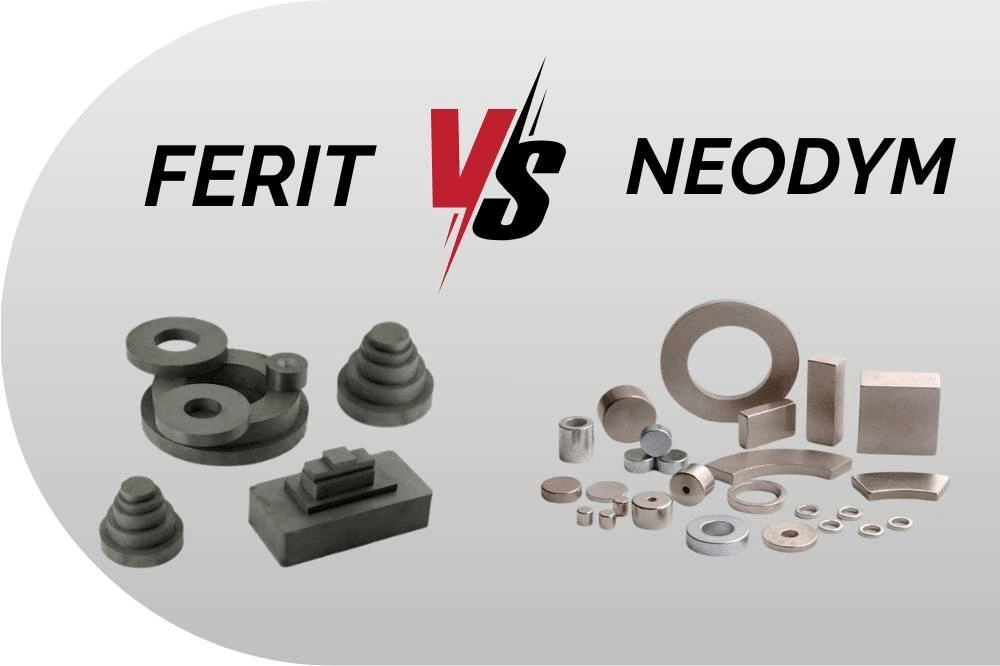
Magnets play an important role in industrial manufacturing, electronic products, motors, automation systems and household equipment. Among all permanent magnet materials, the most common comparison is Rare Earth Magnets vs Regular Magnets. Understanding their differences helps engineers, purchasing managers and product designers select the most suitable magnet solution for different applications.
Rare earth magnets provide extremely powerful magnetic force in compact sizes, while regular magnets focus on affordability and stable everyday performance. This guide explains the key differences between them, including magnetic strength, size, durability, cost and industrial applications.
What Are Rare Earth Magnets?
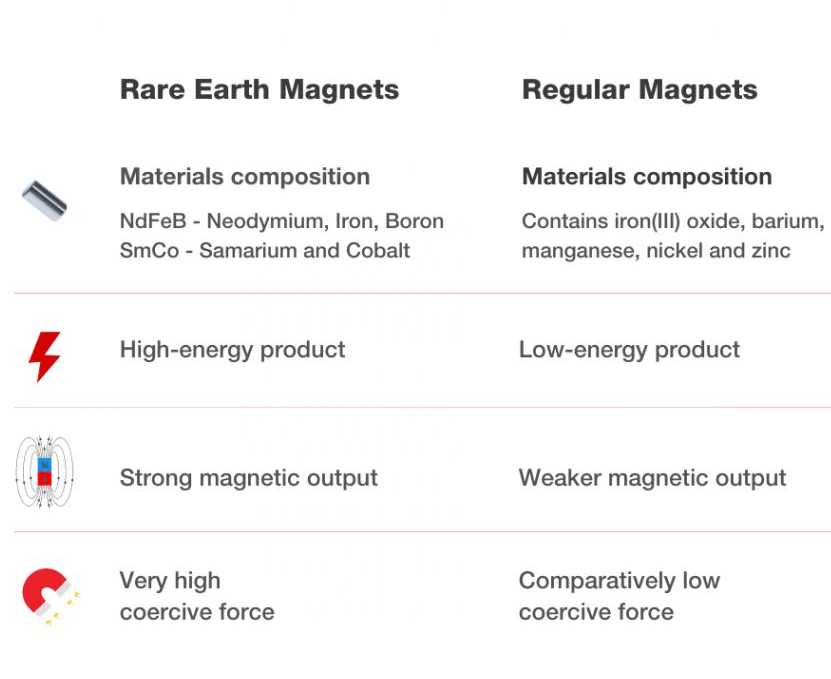
Rare earth magnets are high-performance permanent magnets produced from rare earth alloy materials. The most widely used type is the NdFeB magnet (Neodymium Magnet), known for its ultra-strong magnetic energy and compact structure.
These magnets deliver stable magnetic performance even in very small dimensions. They are widely used in precision equipment, intelligent electronics, electric motors and automated industrial systems.
Main Features of Rare Earth Magnets
- Extremely strong magnetic force
- Compact and lightweight structure
- High magnetic energy density
- Suitable for precision industrial applications
- Commonly coated with nickel or zinc for corrosion resistance
What Are Regular Magnets?
Regular magnets usually refer to standard permanent magnets such as ferrite magnets. These magnets use ordinary raw materials and mature manufacturing processes, making them economical and widely available.
Although their magnetic force is weaker than rare earth magnets, they provide stable performance for general industrial and household applications.
Main Features of Regular Magnets
- Lower production cost
- Good heat resistance
- Stable basic magnetic performance
- Suitable for large-volume production
- Strong corrosion resistance without coating
1. Magnetic Strength Difference
Rare Earth Magnets
Rare earth magnets generate extremely powerful magnetic force. Even a small NdFeB magnet can provide strong adsorption and magnetic induction capability. This makes them ideal for:
- Precision sensors
- Servo motors
- Electric vehicle motors
- Automation equipment
- Smart electronic devices
Regular Magnets
Regular ferrite magnets provide weaker magnetic strength. Larger magnet sizes are usually required to achieve the same magnetic effect. They are not suitable for high-precision or high-power applications.
2. Size and Weight Comparison
Rare Earth Magnets
Rare earth magnets maintain strong magnetism while remaining compact and lightweight. Their small size helps manufacturers:
- Reduce product weight
- Save installation space
- Improve miniaturized product design
- Increase energy efficiency
Regular Magnets
Regular magnets require larger dimensions to produce basic magnetic performance. Under equal magnetic force conditions, they are bulkier and heavier.
3. Temperature Resistance Capacity
Rare Earth Magnets
Standard NdFeB magnets generally operate stably below 80°C. High temperatures may reduce magnetic performance over time. However, high-grade rare earth magnets can withstand moderately higher temperatures.
Regular Magnets
Ferrite magnets offer better natural heat resistance. They maintain stable magnetic performance in high-temperature environments and are widely used in appliances and industrial motors.
4. Corrosion Resistance and Durability
Rare Earth Magnets
Rare earth magnets are vulnerable to moisture and oxidation. To improve durability, manufacturers usually apply:
- Nickel coating
- Zinc coating
- Epoxy coating
These protective layers extend service life and improve environmental stability.
Regular Magnets
Ferrite magnets naturally resist corrosion and oxidation. They usually do not require additional coating treatment and perform reliably in standard environments.
5. Cost and Manufacturing Difference
Rare Earth Magnets
Rare earth magnets use expensive rare earth materials and require more advanced production technology. Their market prices are significantly higher due to:
- High magnetic performance
- Precision manufacturing
- Rare material costs
Regular Magnets
Regular magnets use low-cost raw materials and mature production methods. They offer excellent cost performance for budget-sensitive projects.
6. Main Application Scenarios
Applications of Rare Earth Magnets
Rare earth magnets are widely used in high-end industrial and electronic applications, including:
- Electric vehicle motors
- Precision sensors
- Automatic vending machines
- Wind energy systems
- Medical equipment
- Consumer electronics
- Robotics and automation

Applications of Regular Magnets
Regular magnets are suitable for standard industrial and household uses such as:
- Fans
- Speakers
- Home appliances
- Educational products
- Magnetic holders
- Low-power motors

How to Choose Between Rare Earth Magnets and Regular Magnets
Choose rare earth magnets if your project requires:
- Strong magnetic force
- Compact design
- High precision
- High-efficiency operation
- Advanced automation systems
Choose regular magnets if your project focuses on:
- Low procurement cost
- Stable basic magnetism
- Heat resistance
- Large-volume manufacturing
- General industrial applications
Rare Earth Magnets vs Regular Magnets: Final Summary
The comparison between Rare Earth Magnets vs Regular Magnets mainly comes down to performance and cost.
Rare earth magnets deliver superior magnetic power, compact size and precision performance for advanced equipment. Regular magnets provide affordable and reliable magnetic solutions for standard industrial and household products.
Understanding these differences helps manufacturers optimize product design, improve operational efficiency and reduce procurement costs.
For customized industrial magnet solutions, selecting the correct magnet material is essential for long-term product performance and stability.